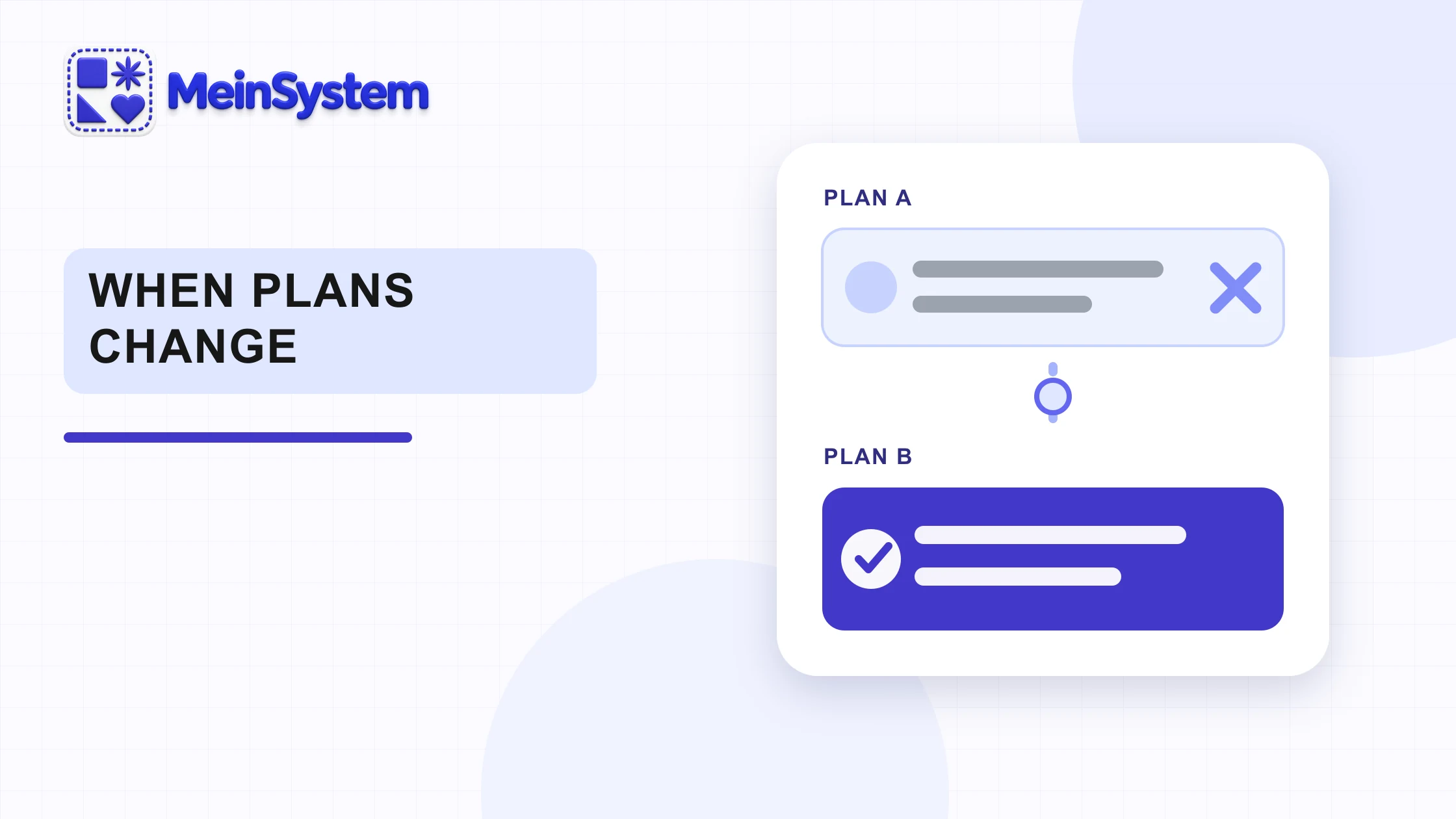

An appointment is cancelled. For one person, that simply creates free time. For you, it may feel as if the internal map of the entire day has suddenly become unusable.
That does not mean you failed to understand the change. You may know exactly what happened. The difficult part can be what comes next: stopping a prepared sequence, processing the new situation, and choosing one continuation from several possibilities.
Why a small change can alter so much
Routines and predictability can create safety and reduce the number of spontaneous decisions. The National Autistic Society explains that routines can be an important way for some autistic people to manage an unpredictable world and reduce stress.
This is individual. Autistic people do not all need the same routines, and not every change is distressing. But when an expected sequence has already been prepared internally, a change can affect more than one calendar entry. Time, travel, food, energy, clothing, and every transition after it may be connected.
A study of autistic adults found associations between intolerance of uncertainty, anxiety, and distress related to change. It was a cross-sectional self-report study and does not establish a simple cause. It does support the cautious idea that uncertainty itself may be an important part of the difficulty (PubMed).
Let the old plan end before demanding a new one
A common response is: “Just do something else instead.” That word “just” is the missing bridge.
Before a new plan can begin, it may help to end the old one visibly. Say or write something concrete: “The 2 p.m. appointment is not happening. I do not need to travel. The sequence I prepared ends here.” This can sound formal, but it frames the change as a defined event rather than diffuse chaos.
Allow a transition next. That might be ten quiet minutes, a drink, headphones, or a small familiar activity. The transition is not wasted time. It is part of reorientation.
Reduce the new decision to three questions
You do not need to optimise the entire day after a change. Answer only:
- What remains unchanged?
- What definitely no longer happens?
- What is the next small anchor?
The anchor might be lunch, the next routine, a fixed appointment, or a familiar activity. Build only the section from that anchor to the next reliable point. The rest of the day can remain open for now.
If switching tasks generally requires a lot of energy, our article about task switching with autism offers more strategies for the transition between two activities.
Prepare Plan B as a category, not a second perfect day
Plan B does not have to anticipate every possible event. That would become another planning project. A few categories are more useful:
- An appointment is cancelled: choose a reliable place or known activity for the open window.
- Something takes longer: decide which later item can be removed first.
- Energy is lower: prepare a smaller version of the most important routine.
- The location changes: make the information, route, and sensory conditions visible.
A prepared Plan B does not say, “This is exactly how the alternative must happen.” It says, “If I cannot make several new decisions right now, I still have a safe place to begin.”
Make the change visible
A change that exists only in conversation can remain difficult to grasp. Update the calendar or visible daily plan. Clearly remove the old item instead of holding its invalid status in your head. Add the new next step and, where possible, the reason for the change.
When another person communicates a change, a clear message helps: what is changing, what is staying the same, when more information will arrive, and what alternatives are available? Vague statements such as “we will see later” can keep uncertainty active.
The National Autistic Society mentions preparation, visual supports, additional processing time, and prepared alternatives among possible supports. None will automatically suit everyone. They are options from which a person can choose.
Plan recovery after the adjustment
Even if you responded quickly on the outside, reorientation may have used substantial energy. A newly open time window is not automatically free capacity.
Reduce expectations for the rest of the day after a difficult change. Choose a smaller routine, postpone nonessential decisions, and make the next transition as clear as possible. The goal is not to recover lost productivity immediately. The goal is to find reliable ground again.
How meinsystem.app can be used when plans change
In meinsystem.app, appointments, routines, and tasks can be viewed together in the daily flow. When an appointment is cancelled, the rest of the day remains visible. A routine can be represented as individual steps or a smaller version, so you do not have to reconstruct the consequences of the change across several apps.
That does not prevent the distress of a change and it is not a therapeutic intervention. For some people, a paper plan, a message from a trusted person, or a quiet pause will be more helpful. The app can support situations in which an updated visible sequence reduces the next decision.
You can also view the German autism templates or learn how meinsystem.app is designed as an everyday routine app for autistic adults.