



Why meinsystem.app exists
From a wall of notes to an app.
I am Max Anton Schneider. I received my ADHD diagnosis at 19 and my autism diagnosis at 26. meinsystem did not begin with a business plan. It began with one question: how can I start my morning when my mind cannot find the next step?
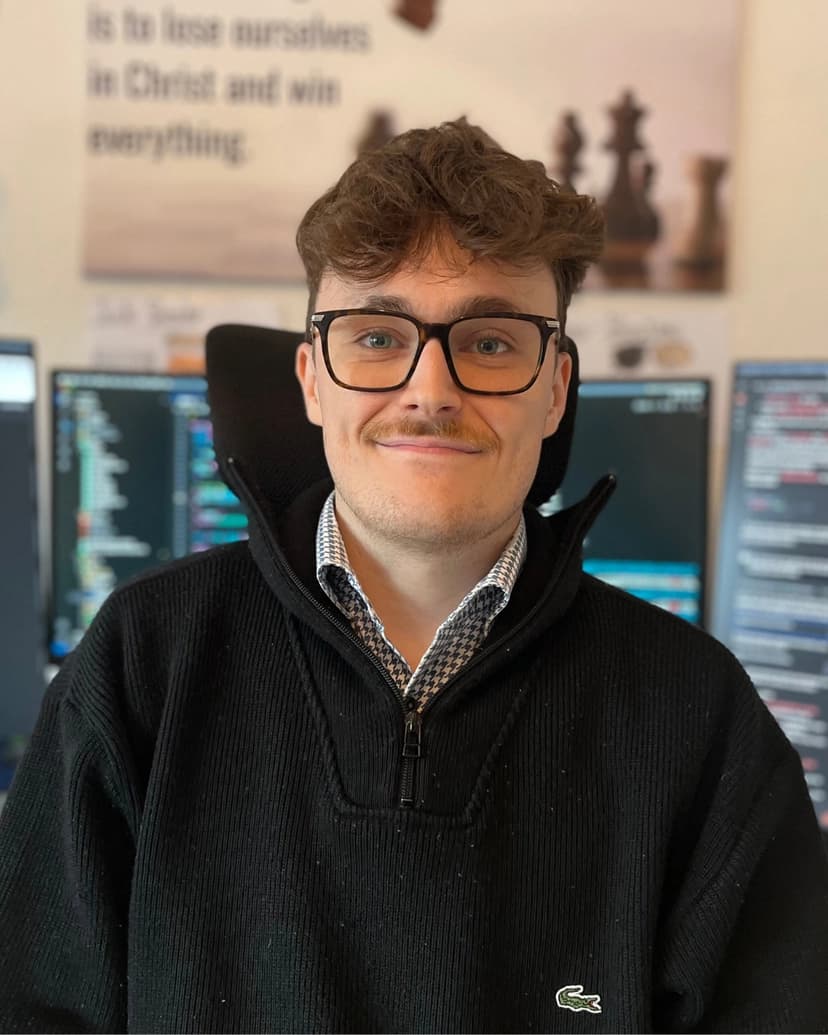
ADHD at 19. Autism at 26.
For seven years, I already knew that my mind worked differently — yet a large part of the explanation was still missing. The ADHD diagnosis helped me understand many things. But it did not explain why I needed clear routines so urgently, why unexpected changes and sensory input could exhaust me, or why situations that looked unremarkable from the outside could take so much energy on the inside.
Only after my autism diagnosis did the contradictions make more sense: my ADHD seeks new ideas, movement, and quick stimulation. My autistic side needs predictability, depth, and a clear sequence. I can want variety and be overwhelmed by change. I can need structure and still grow bored of it.
That combination is what makes everyday life so difficult for me. I often need freedom and support at the same time. The diagnoses did not change me. They gave me language for what had always been there — and helped me stop building my daily life against my own mind.
It started with an overwhelming morning.
I would wake up with too many thoughts already competing in my head. What do I need to do? Where do I begin? In which order? Simple tasks turned into many decisions at once.
Sometimes I got stuck in a loop, had a meltdown, went back to bed, or ended up doomscrolling. The day felt over before it had properly begun.
That had nothing to do with a lack of willpower. Making the same decisions again and again used the energy I actually needed to begin.
Paper became my backup plan.
I first wrote down my morning routine — not only as a heading, but step by step. Then came my evening routine, meals, recurring tasks, and processes for appointments or shopping.
Whenever I did not know how to continue, I could look it up. The decisions had already been made in a calmer moment. That made me feel safer, helped me feel grounded, and gave my mind less to carry.
The system on paper
One sheet became an entire wall.
These photos show how my external memory grew: from the first routines to an entire room full of processes, rules, and reminders.
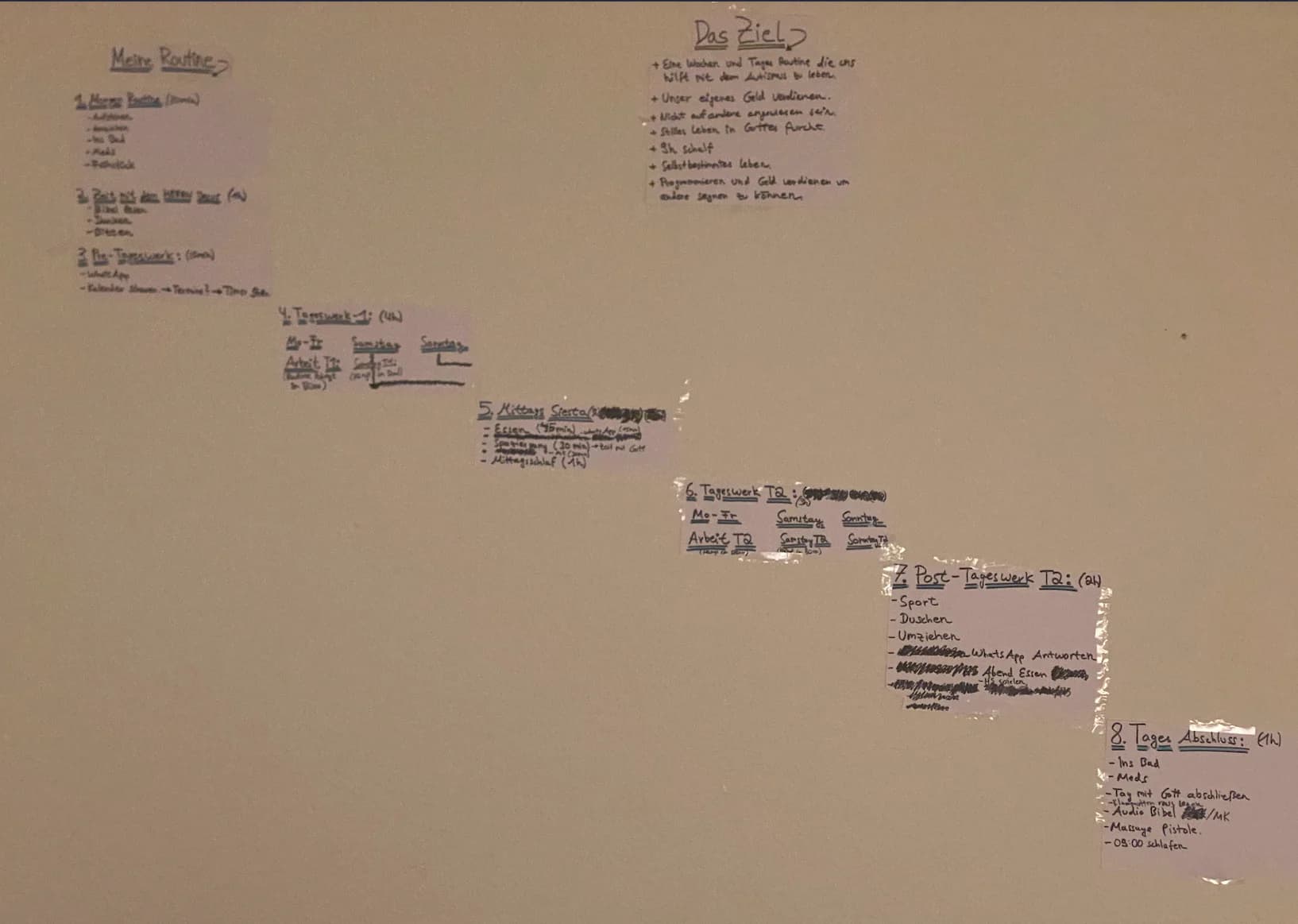
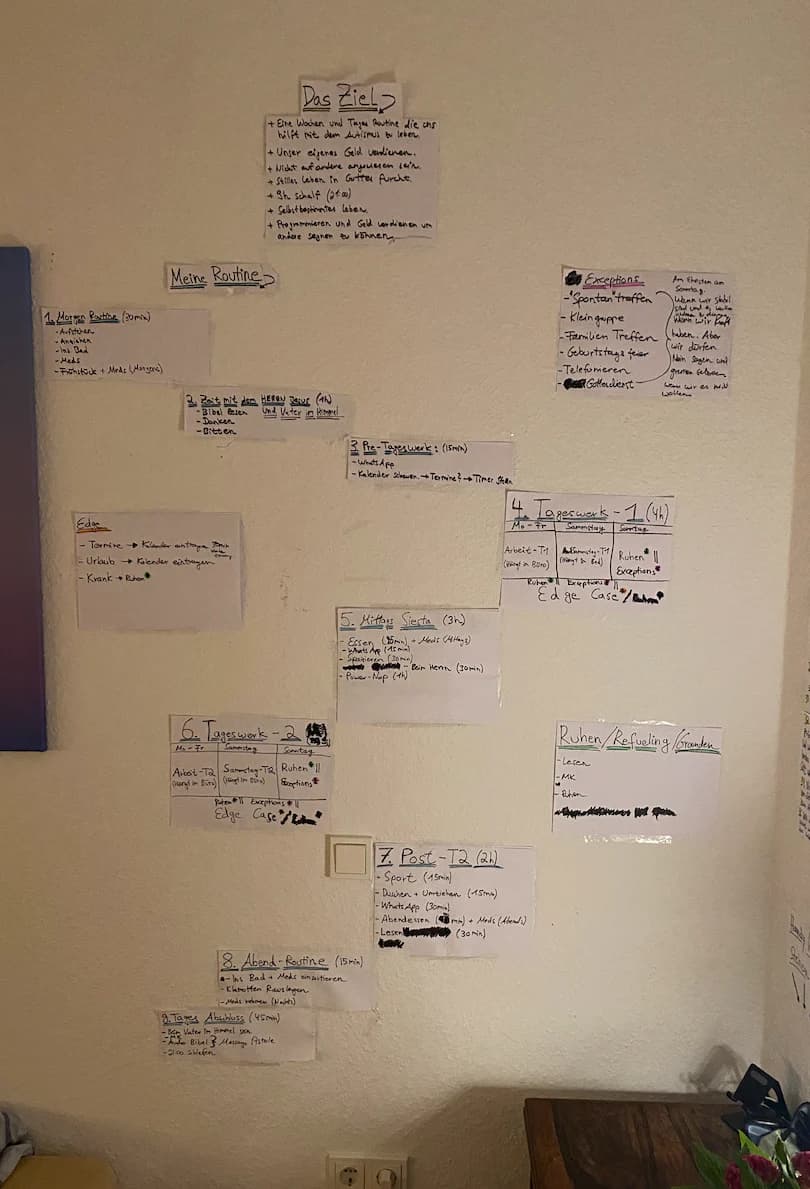
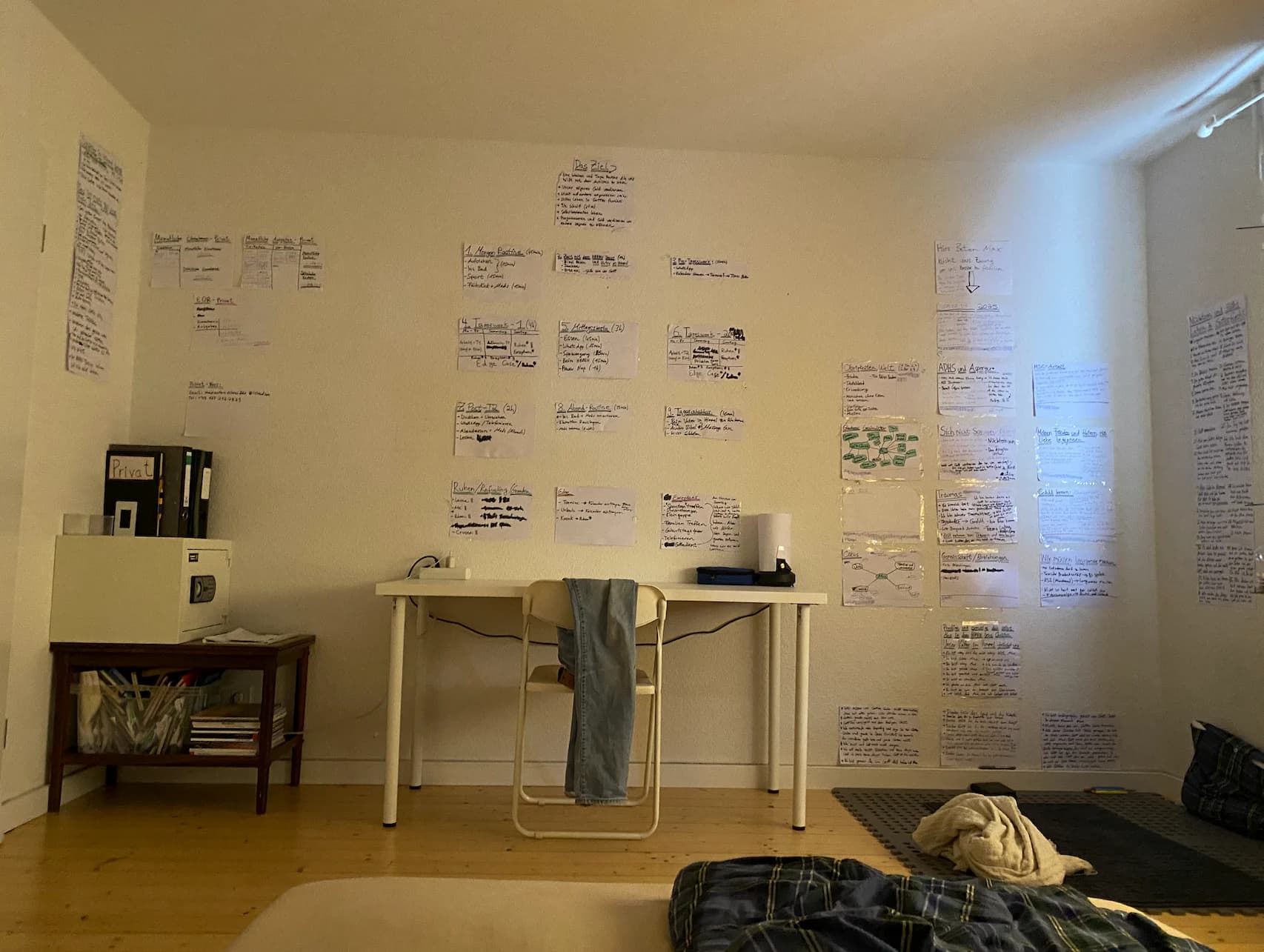
The backup plan became an app.
I tried to-do apps, calendars, and combinations of both. Something was always missing: reusable processes, routines for specific days, or lists attached directly to an appointment.
Over roughly a year, I moved my notes into an app step by step. I used it, noticed where I still got stuck, and improved it again. The features did not come from a product roadmap. They came from my real everyday life.

"I do not want to make every decision all over again each day. I want to be able to look things up when I do not know how to continue."
Structure is a handrail, not a cage.
I cannot plan my entire life — and I do not want to. I mainly prepare the places where making the same decisions repeatedly would otherwise drain my energy.
The structure does not tell me how I have to live. It is there when I need orientation, giving me back the ability to begin with one manageable step.
My backup plan today
The help is now on my wrist.
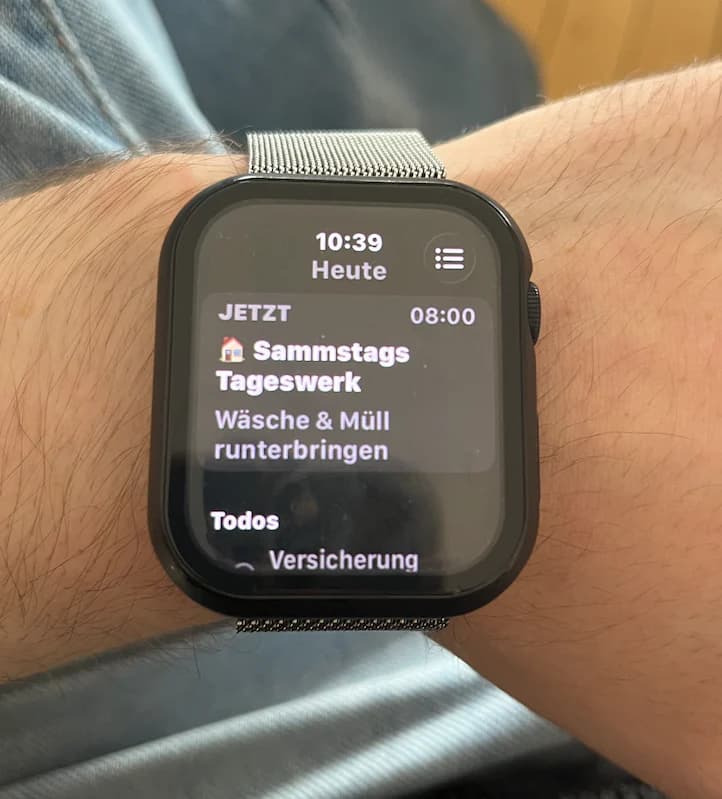
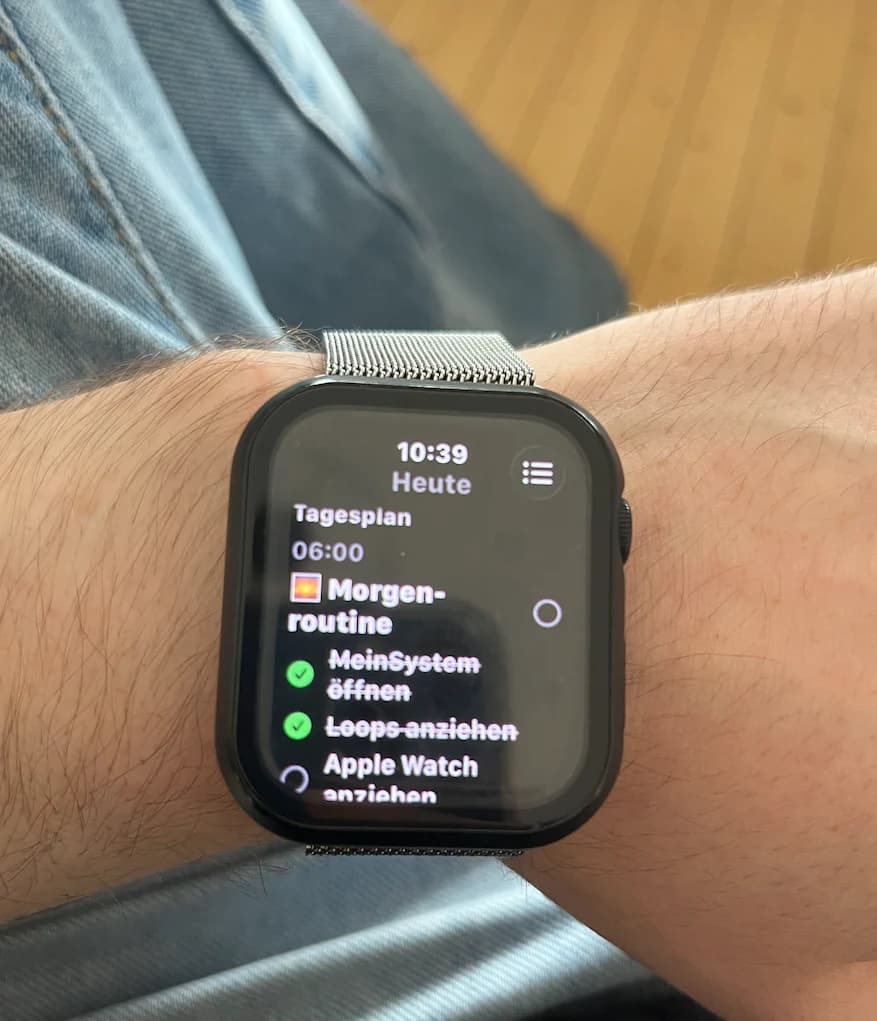
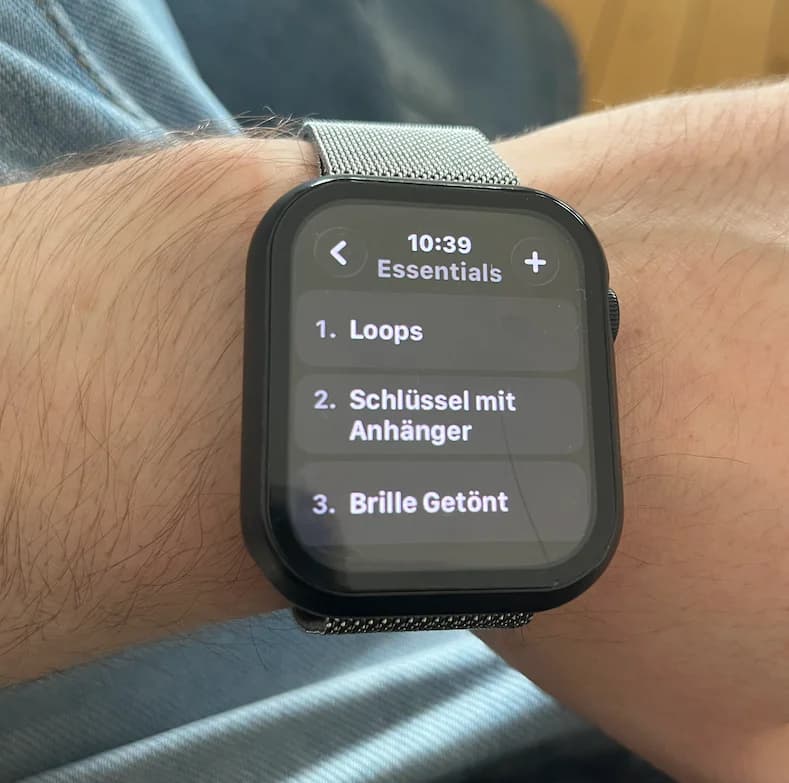
Today, the first thing I do in the morning is open meinsystem on my Apple Watch. I see what is happening now and then the next step — without having to sort through the entire day in my head first.


What changed
Fewer
repeated decisions
processes are prepared
One step
at a time
instead of everything at once
Always there
on my Watch
help when I get stuck
Difficult mornings have not disappeared. But I now have a way back into the process. The plan is already there, so I do not have to start from zero in an overwhelmed moment.
Why I am sharing this.
I built meinsystem because I needed it myself — not as another productivity hack, but as practical support for people whose daily lives work in a similar way.
This page tells the short version. In the blog, I write in more detail about the wall of notes, the year of development, and why fewer decisions can make starting easier.
This is my personal experience of AuDHD and everyday structure. meinsystem is a planning tool and does not replace medical advice, diagnosis, or treatment.