ADHD · Daily plan
ADHD daily planner: make the day visible, not perfect
This is not a rigid hourly schedule. It separates fixed appointments, essential actions, and flexible tasks so everything does not have to stay in your head.

ADHD daily planner: make the day visible, not perfect
What this template addresses
A useful daily plan answers three questions first: What is fixed? What is essential? What can wait?
Edit the steps below, check them off, add your own, and copy or print the result.
Example day: an appointment is fixed at 11 a.m. Beforehand, pack the papers and allow for travel. After eating, choose just one essential task: open the document with a pending question and mark the missing detail.
If the appointment runs late, drop the flexible task “sort the desk.” The next action is still “open the document”; other open tasks stay outside today’s selection. Adapt the steps below to this example or your own day.

Low-energy version
- 01Look only at fixed appointments and essential health tasks
- 02Secure food, water, medication, and one break
- 03Explicitly move everything else to later

Adapt the template
- Plan no more than one larger optional task for the day.
- Treat travel and transitions as time blocks of their own.
- Write tasks as visible actions rather than large outcomes.
- Leave empty space in the plan; it is capacity, not failure.
More templates
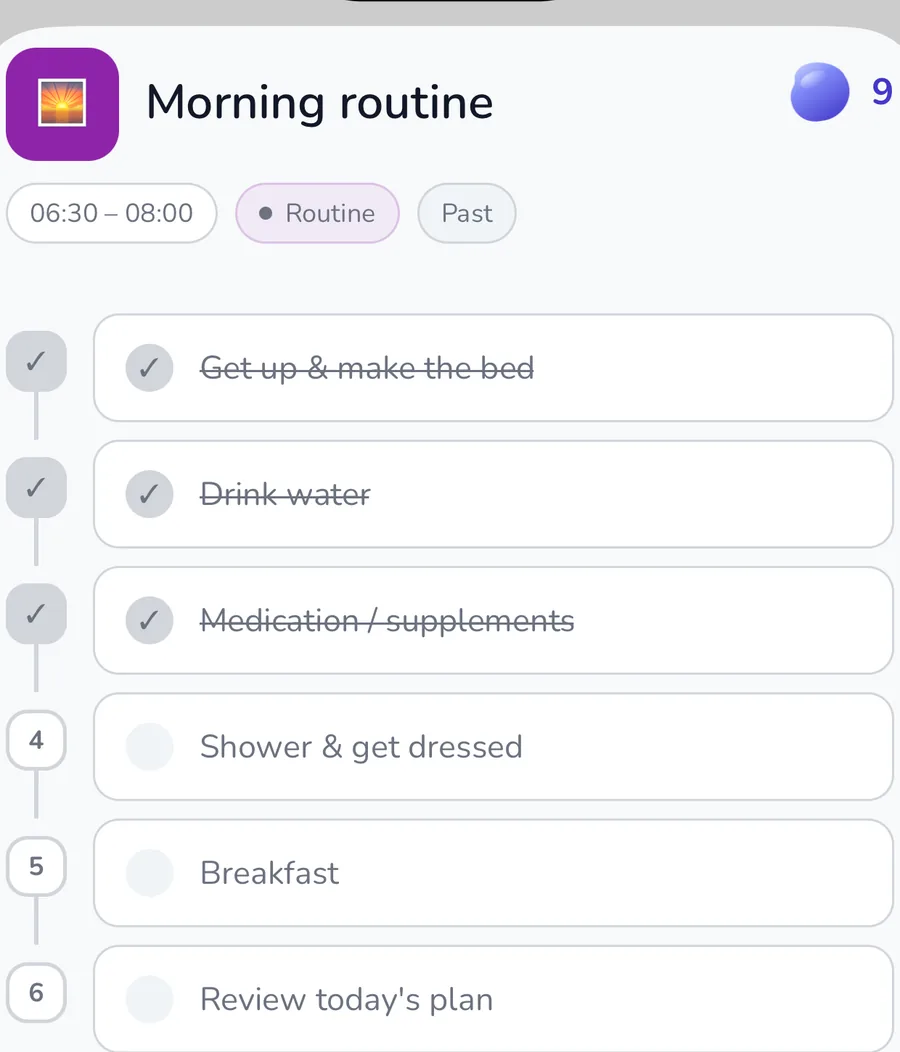
ADHD morning routine: a template that can start small
- Sit up, put both feet on the floor, and drink something
- Use the bathroom and brush your teeth
- Take medication or complete other essential health tasks
ADHD evening routine: help the day become quieter
- Reduce the light level and background noise
- Write down open thoughts or tasks for tomorrow
- Refill your water bottle and prepare essential medication
Autism daily planner: make transitions and changes visible
- Check current energy and sensory capacity
- Add fixed appointments and non-negotiable demands
- Add preparation, travel, and transitions as separate steps
AuDHD daily planner: combine fixed anchors with flexible capacity
- Check energy, sensory load, and current activation
- Add fixed appointments, travel, and transitions
- Protect food, water, medication, and breaks
Common questions
How many tasks should an ADHD daily planner include?
Alongside fixed appointments, one genuinely important task is often enough. Extra tasks can remain flexible options without overloading the day.
Can I change individual steps?
Yes. Edit, check off, or remove any step and add your own steps.
What if my plan no longer fits the day?
Do not keep planning the original ideal day. Recheck what is fixed and essential, then deliberately remove the rest.
How do I keep my edited plan?
Copy the plan or use “Print” to open your browser’s print dialog. You may be able to save as PDF there; there is no separate PDF download. Entries are not saved permanently on this page. Keep a copy before leaving.
Related features and articles

Use your plan as a daily flow
Bring routines, appointments, and tasks together in one daily view.
ViewBuild a daily structure with AuDHD
A personal look at systems that did not survive everyday life.
ViewTime blindness even with a calendar
Why visible appointments do not always solve the whole problem.
ViewWeekly plan or daily plan?
Choose the right planning horizon and connect both without duplicate task lists.
View
Low-energy day plan
Keep the same day valid with fewer steps.
ViewBreak a task into steps
Write down the next visible movement without an account.
View
Include your own morning as a parent
Your preparation, clear agreements and a short version for limited time.
ViewADHD · Daily plan
Connect this routine with appointments and tasks
Payment details required · cancel anytime