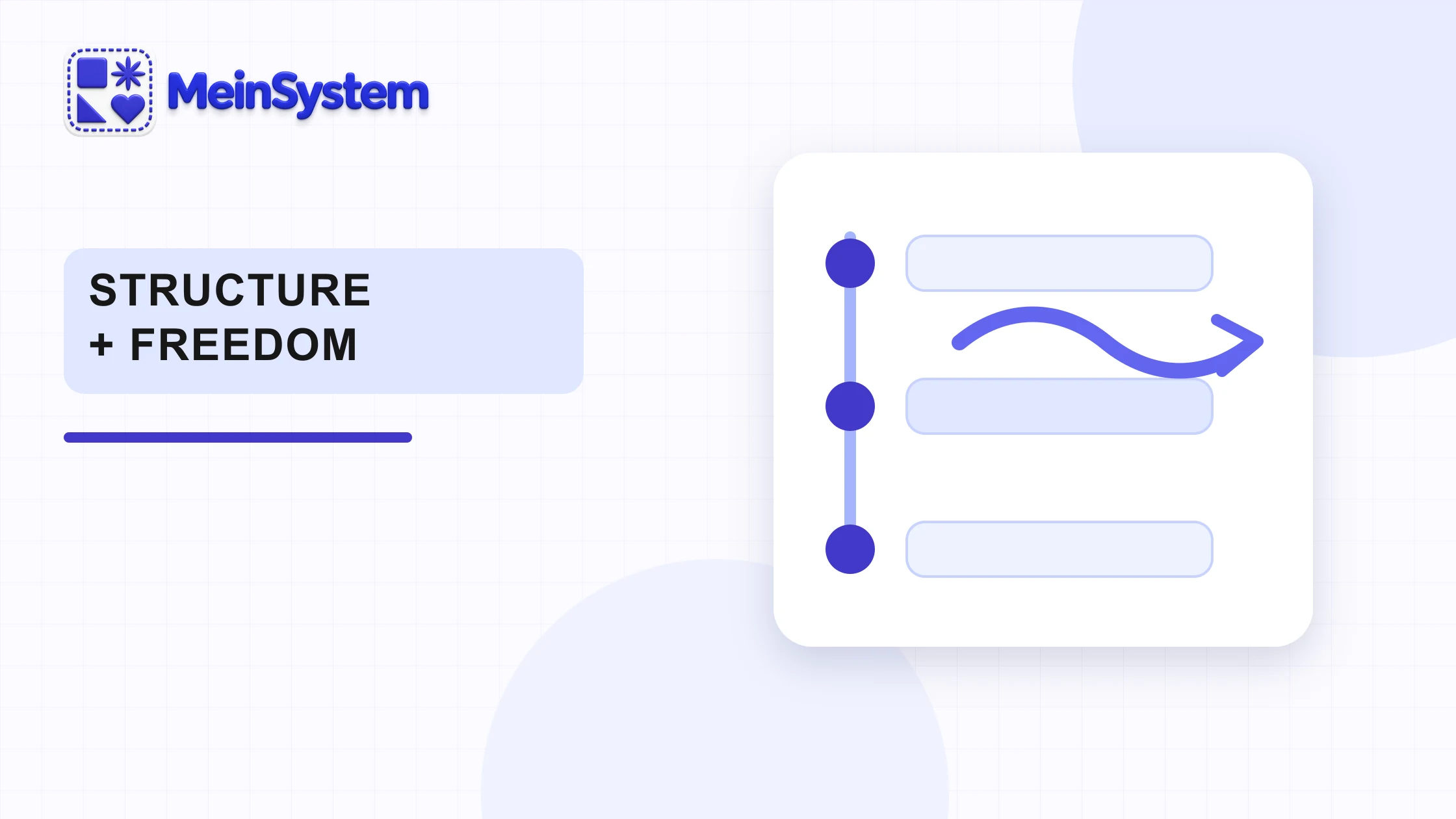

I can long for structure and feel restricted by the very same structure. I can need a precise plan and find it unbearable a moment later. From the outside, that looks contradictory. In my daily life with autism and ADHD together, it is a recurring planning problem.
AuDHD is a community term for co-occurring autism and ADHD, not a separate diagnosis. People do not all experience this combination in the same way. The term still helps me describe the interaction: predictability may reduce load while interest, activation, and capacity change more sharply.
More structure is not automatically the answer
When a day feels chaotic, a more detailed plan seems like the obvious solution. Every hour gets a task, every routine gets a fixed time, and every deviation gets another entry. That may provide short-term safety and create more pressure later.
Autistic people may benefit from clarity, predictability, and structure. The NICE guideline for autistic adults also emphasises autonomy, individual needs, and flexibility. For me, that means a plan should provide orientation without closing every decision in advance.
ADHD may make planning, organisation, and time management require more effort. The NIMH overview of ADHD in adults describes these possible difficulties. An overly detailed system can therefore increase the exact regulation it was supposed to reduce.
Stable anchors instead of a completely fixed day
An anchor is a point that still offers orientation when the rest changes. It could be an appointment, a meal, a short morning sequence, or the transition after arriving home.
Not every minute between two anchors needs to be allocated. A few flexible tasks can remain there. The frame answers “What stays reliable?” without forcing an answer to “What exactly must I do at 2:20 p.m.?”
A day might have three anchors: medication and calendar in the morning, lunch at midday, and checking tomorrow's appointment in the evening. Between them, you select one next step according to time and capacity. The structure lives in the return points rather than in a continuous schedule.
Choices need boundaries
Complete freedom can be overwhelming too. When twelve tasks, four places, and three useful sequences remain open, choosing becomes the main task.
Do not constrain everything. Constrain the decision that belongs to this moment. Instead of asking “What do I want to do today?”, ask whether the next block holds the small household task or the first project step. Two genuine options preserve choice without opening the entire backlog.
A prepared selection is not a rigid command. You can review it when sensory load, energy, or an appointment changes the day. The important part is that an adjustment does not invalidate the whole system.
One routine can have several valid versions
I need recognisable sequences, but my capacity is not the same every day. I therefore plan a core, a standard version, and extras rather than only complete or skipped.
The core answers one question: what preserves the purpose? An evening routine might contain medication, brushing teeth, and setting the alarm. The standard version adds clothes and a bag for tomorrow. Extras such as tidying or reading happen only when they genuinely fit.
Our German guide to a minimal routine helps define that core. For changing days, the guide to a flexible routine shows how an event can replace a fixed clock time as the cue.
Changes need a visible bridge
Flexibility does not mean unexpected changes have to be easy. When an appointment is cancelled, the internal sequence may still collapse. “Now you are free” does not build the missing bridge. Clearer questions do: what has ended, what remains, and what is the next anchor?
A visual Plan B can stay small. Remove the old item clearly, name the change, and re-plan only the next section. The rest of the day does not need immediate optimisation. Our German guide to planning autistic transitions walks through that change step by step.
The system can look different on different days
A useful system does not need to display the same amount every day. On a stable day, the daily plan may hold appointments, routines, and two tasks. On an exhausted day, it might show only basic needs, one fixed appointment, and a small next step.
That is not inconsistent. The rules remain the same: a few anchors, a visible choice, and clear transitions. Only the size changes. This distinction between a stable frame and variable content is what makes flexibility usable for me.
A small test for this week
Choose one part of the day that has become either too chaotic or too rigid. Set one anchor. Define a small and a normal version. Limit the flexible choice to two options. Test the design on one quiet day and one busy day.
Then look beyond how much you completed. Ask whether you knew where to begin, whether you could change something without discarding everything, and whether the small version was genuinely visible.
meinsystem.app brings recurring routines, appointments, and selected tasks into one daily flow. That is one possible form for this frame, not the only correct one. Paper, cards, or a calendar may suit you better. If you want to try the idea without an account, build a smaller version with the low-energy day plan or read the guide to structuring daily life with AuDHD.