Appointments as stable anchors
Appointments provide fixed points in the day. Preparation, travel and recovery can be visible parts of them too.
Calendar and appointments →Planning with autism and ADHD
An AuDHD planner needs to do two things at once: provide enough predictability for routines to remain understandable and enough flexibility for days when attention, sensory load or energy are different from expected.
Planning means making connections visible
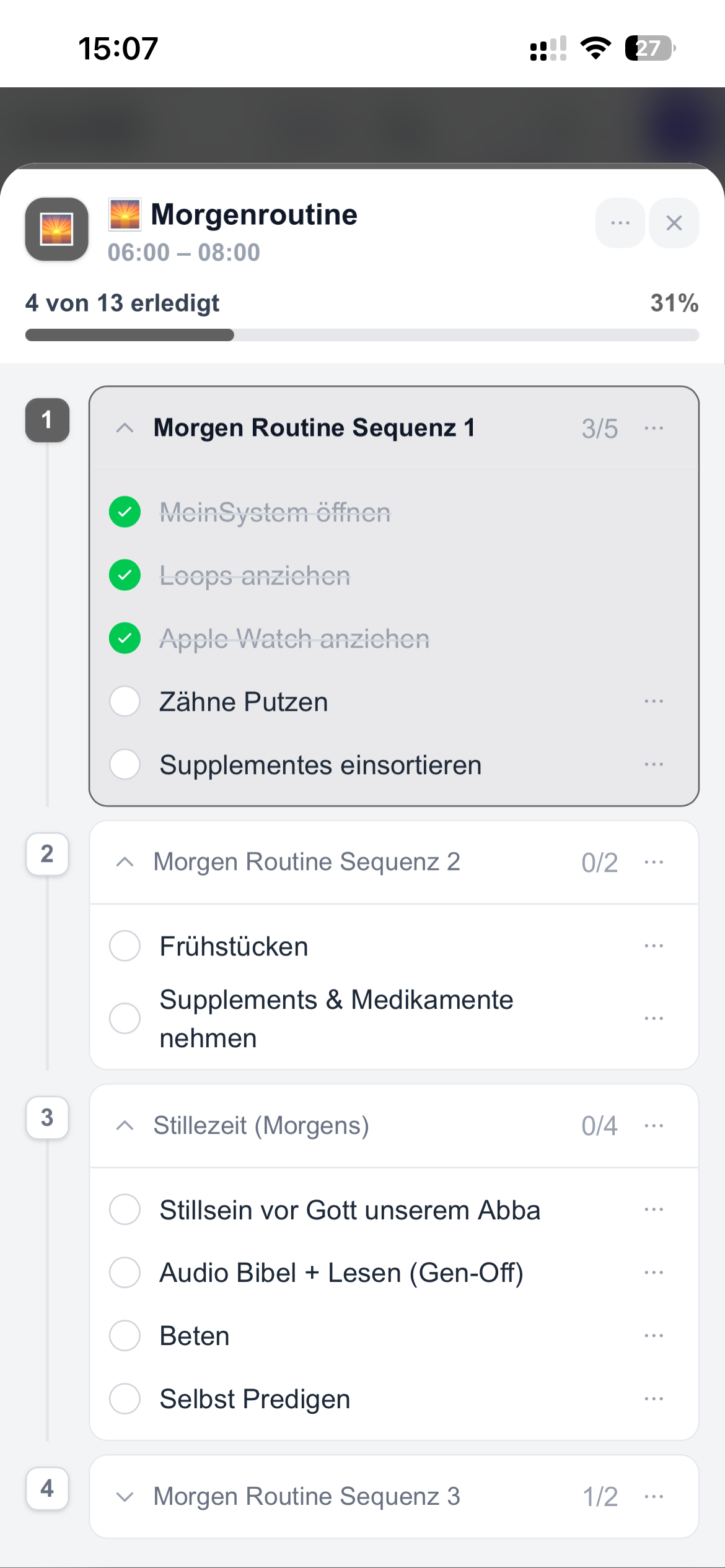
A traditional planner records appointments and tasks. With AuDHD, much of the coordination can still remain in your head: What comes before this, where do I start, which routine applies today and how do I return after an interruption? A helpful daily planner connects stable anchors with concrete steps and allowed alternatives.
Payment details required · cancel anytime
The invisible planning work
A calendar shows when something starts. A task list shows what is still open. Neither automatically explains the transition, the first action or the smaller version for a difficult day. Repeating that translation each time uses the capacity you need for the task itself.
One shared daily context
Planning does not require a schedule for every minute. A few connected layers can make the day easier to understand.
Appointments provide fixed points in the day. Preparation, travel and recovery can be visible parts of them too.
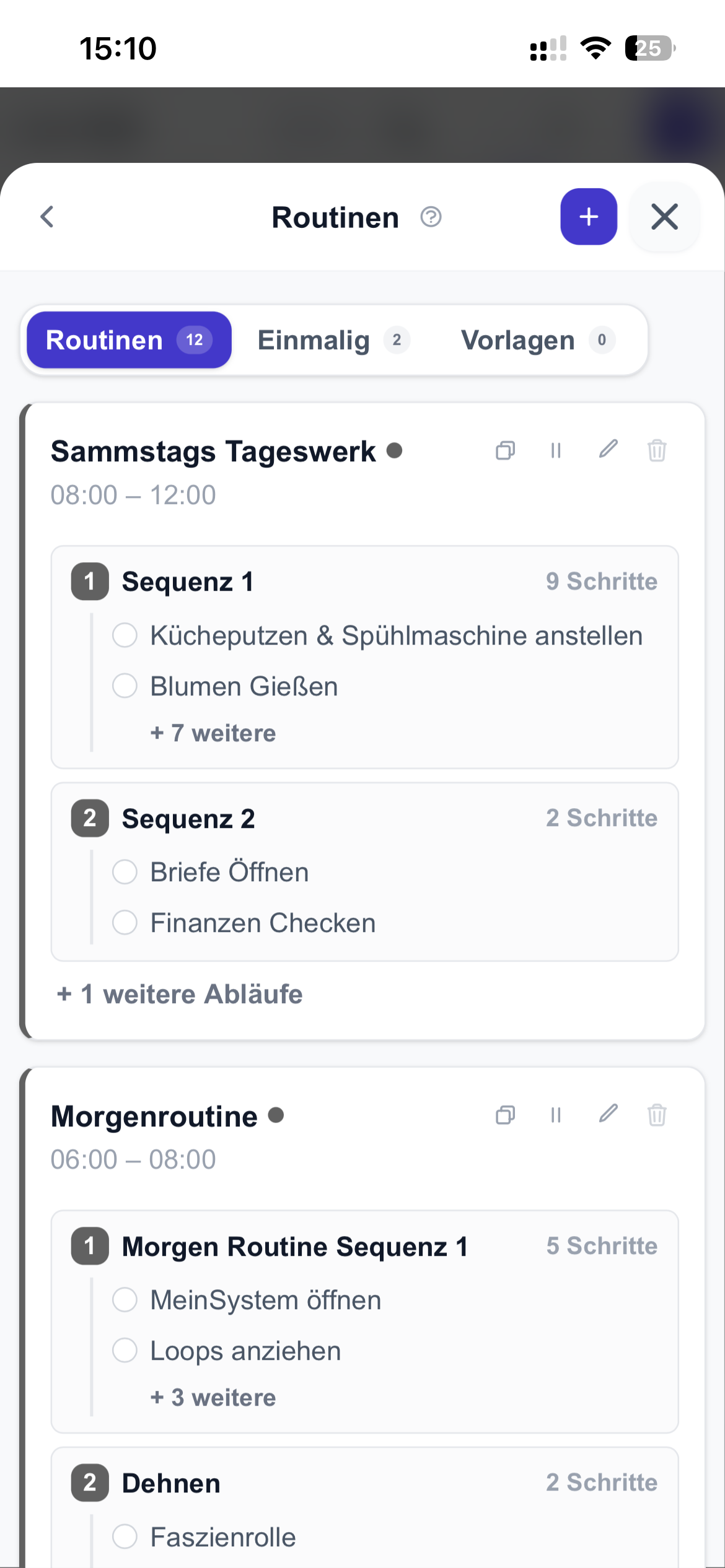
Calendar and appointments →Recurring activities are broken into small steps, so they do not have to be rebuilt in your head every morning.
Routines with steps →Flexible tasks remain visible without forcing every task into a precise time or making everything look equally urgent.
Flexible tasks →The daily flow shows where you are and where you can resume after a switch or interruption.
View the daily flow →Planning with limited capacity
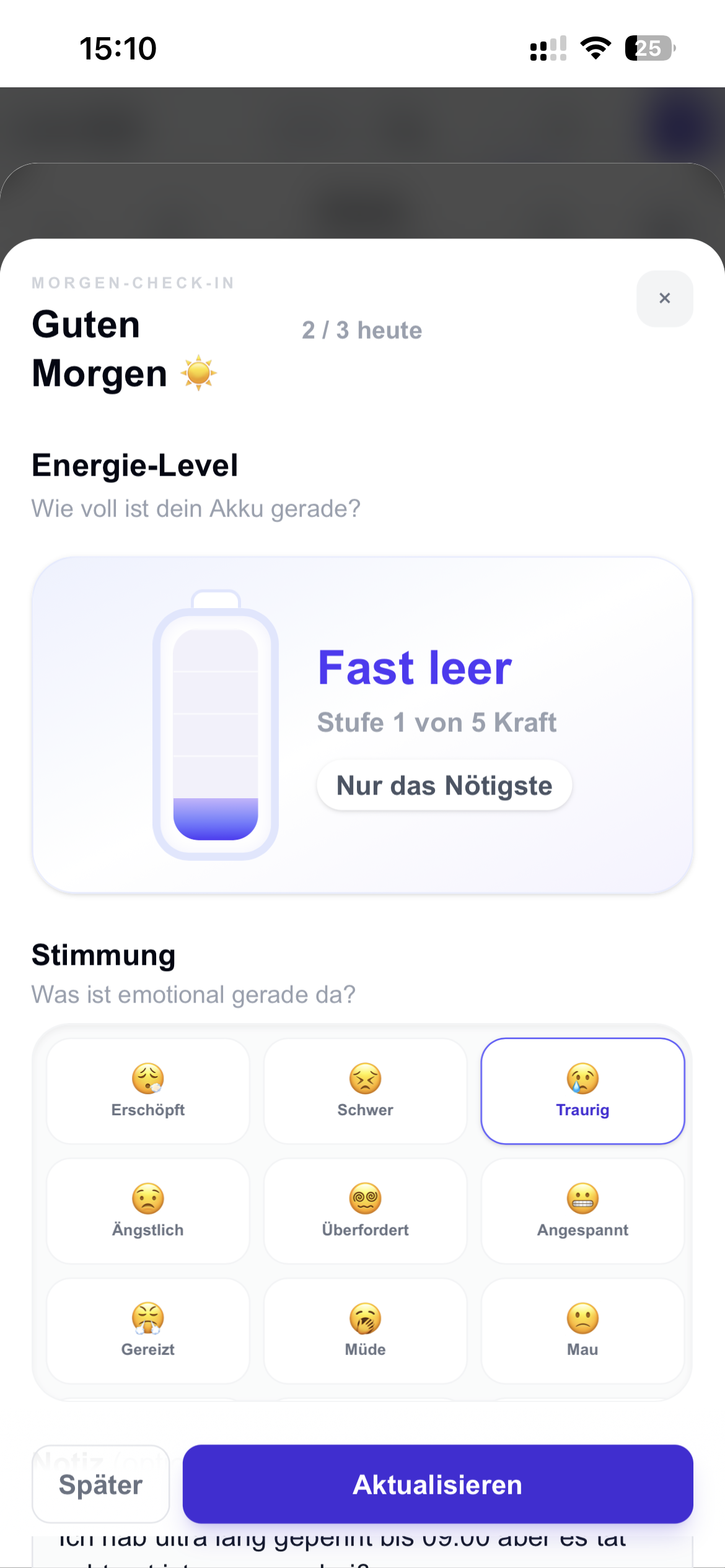
Planning only works in everyday life if it also works on difficult days. Less available energy changes the plan; it does not make the day a failure.
Clear boundary
meinsystem.app is a digital system for everyday life, not a medical app. It does not diagnose or treat autism or ADHD. You can try the visible structure and decide whether it suits you without needing a diagnosis.
Weiterlesen
Features, user experiences and common questions about meinsystem.app.
View →Plan mornings, evenings, household tasks and the week with flexible alternatives.
View →A gentle guide to decisions, transitions and difficult days.
View →Personal articles about routines, time blindness, ADHD and autism.
View →An AuDHD planner is an everyday system that considers the combined needs of autism and ADHD. It can bring fixed appointments, predictable routines, flexible tasks and concrete next steps together.
No. Too much detail can become overwhelming. Usually, you only need enough structure to understand the next step and find your way back after an interruption.
Yes. Routines and tasks can be reduced, postponed or skipped. The plan should provide orientation, not create an additional backlog.
No. meinsystem.app is an organisational aid for everyday life, not a diagnosis or therapy app.
Start with one real routine