
I did not build meinsystem because I had always wanted to create a productivity app.
I built it because I eventually ran out of space on my wall.
That wall was covered with sheets of paper containing my morning routine, my evening routine, processes for appointments, and lists for things that might feel automatic to other people. For me, those notes were a backup plan. Whenever I did not know how to continue, I could look it up.
Today, I carry that backup plan on my Apple Watch.
There were too many questions every morning
My morning routine was where everything started.
I would wake up with many thoughts already competing in my head. I did not know where to begin. What do I need to do? In which order? How exactly do I do it? When do I need to leave? Why does even the first step feel so difficult?
One ordinary task turned into many simultaneous decisions in my head. Sometimes I got stuck in a loop I could not get out of on my own. I became so overwhelmed that I had a meltdown, went back to bed, or started doomscrolling. After that, the day often felt lost before it had really begun.
For a long time, I thought I simply needed to start faster or try harder. But my problem was not that I did not know how to brush my teeth or make breakfast. My problem was having to make too many small decisions all over again every morning.
So I wrote everything down for the first time
I started with the things I do in a similar way every day.
I did not only write headings such as “brush my teeth” or “get ready.” I also wrote down the processes behind them: where I begin, what comes next, and why I do it that way. That meant I no longer had to rebuild the routine every morning.
A decision I had already made in a calm moment did not have to be made again in an overwhelmed one.
That level of detail may sound excessive. For me, it created a sense of safety. When my brain knew how to continue, it did not have to plan, remember, prioritize, and begin at the same time.
In my article about building a morning routine with ADHD, I explain why small, visible blocks help me more than a perfect schedule. The origin was much simpler: one sheet of paper on which the next step was already written down.
The notes became my backup plan
After the morning routine, more routines followed. My evening routine. Lunch. Recurring tasks. Things I regularly need in everyday life.
Of course I cannot plan my entire life. I never wanted to. But I could prepare the parts where I kept getting stuck on the same questions.
Appointments made that especially clear. If I had a dentist appointment, I did not only write down the time. I also noted everything connected to it:
- find my health insurance card
- plan the route
- work out when I need to leave
- prepare anything I want to take
- check what happens immediately before and afterward
Going shopping was not simply “go shopping,” either. It consisted of several steps and a list connected to that particular appointment.
Every individual note removed a few decisions. Together, they became a kind of external memory. When I got stuck, something outside my head could tell me: This is where you continue.
Eventually, the whole wall was full
The system worked. And that success created the next problem.
These three photos show quite clearly how my system developed. The first written processes became more routines, rules, and reminders until almost the entire room had become part of my external memory.
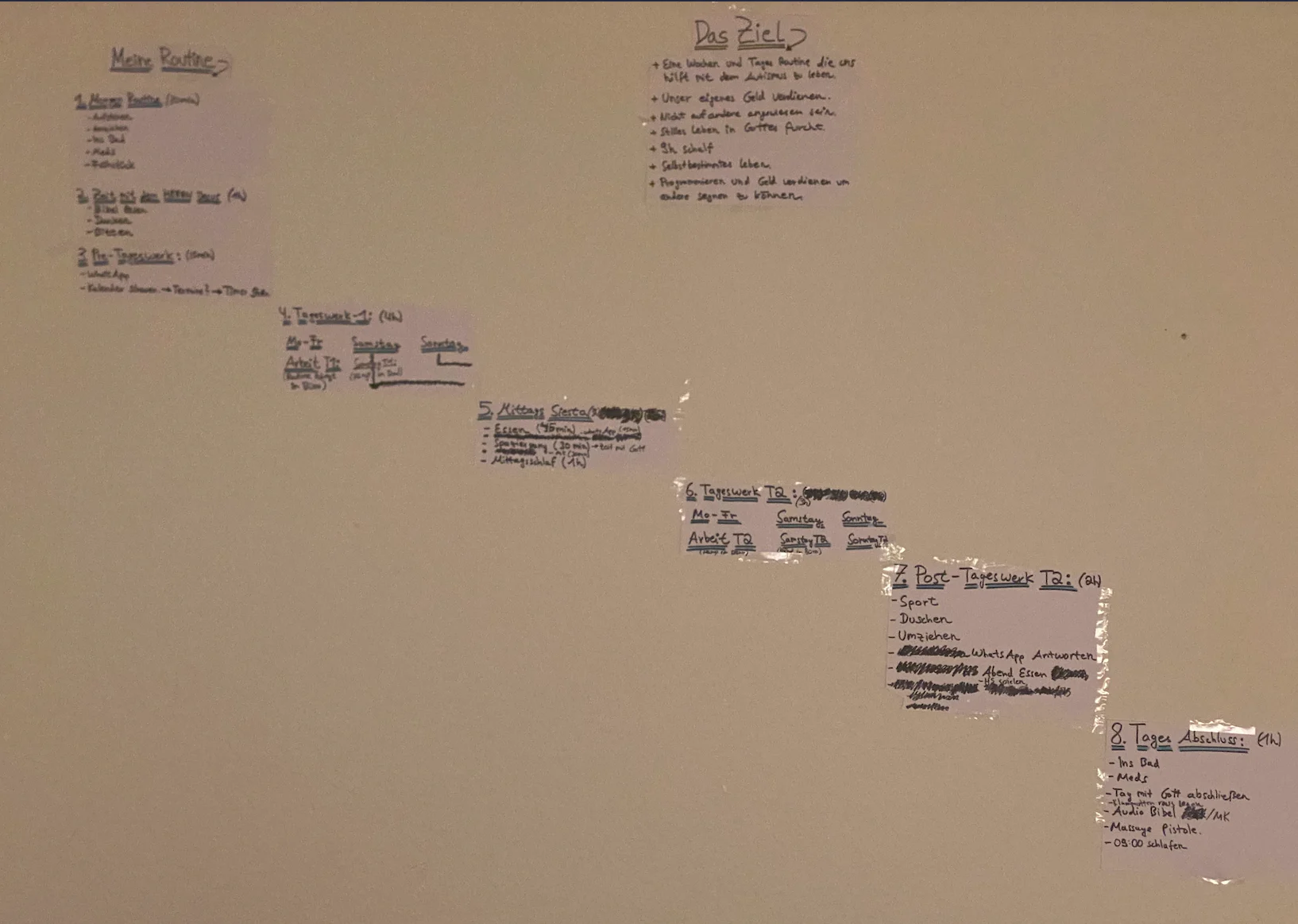
At first, individual sheets of paper created a visible sequence for my day.
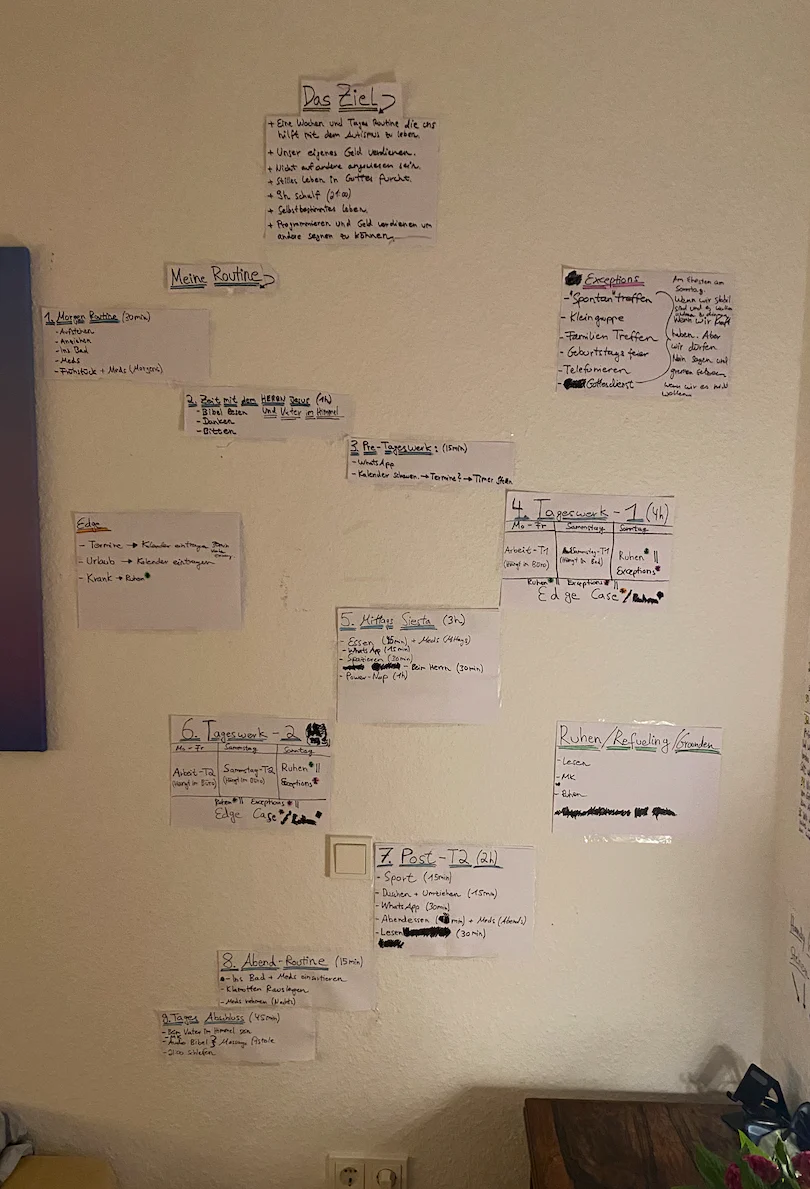
Over time, I added more routines, exceptions, and rules for different situations.
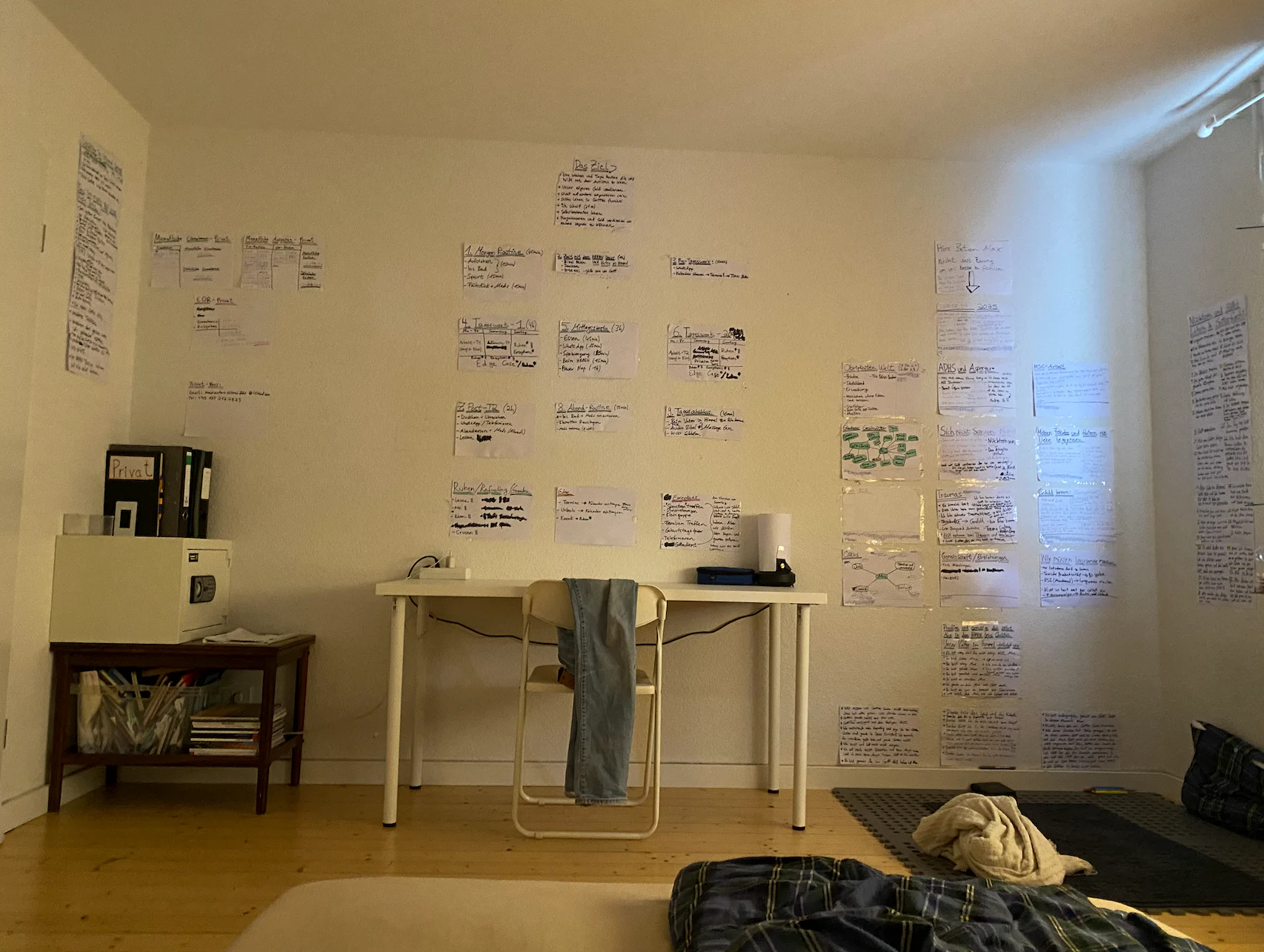
Eventually, one small wall of notes was no longer enough. The structure spread across almost the entire room.
The number of sheets grew very quickly. Routines, processes, appointments, and lists covered the wall. I could look things up, but by then I had to remember which sheet contained the right information.
That was when I first thought: I need an app for this.
I tried different apps. Many were pure to-do apps. I could create lists, but my day and appointments were missing. Others were calendars, but they lacked tasks and reusable processes. Some calendars included to-dos, but I could not build the routines I need on specific days. I could not simply attach the right process or a dedicated list to an appointment.
Each app solved one part. None of them reflected the way I needed to structure daily life with autism and ADHD.
At first, I did not know what would work either
That is why meinsystem did not begin with a finished feature list.
For about a year, it was a process of first discovering what actually helped me with routines and what did not. I moved my paper notes into the app step by step. Then I used it myself, noticed another problem, and improved it again.
That is how reusable processes emerged. If the preparation for several routines or appointments is similar, I want to define those steps once and use them again. If an appointment needs its own list, that list should be available exactly where I need it.
The features did not come from asking, “What else should a large productivity app be able to do?”
They came from asking, “Where am I getting stuck right now, and what would my system need to show me here?”
Structure is not a cage for me
From the outside, routines this specific may look rigid. They feel different to me.
A routine is like a handrail. I do not always have to hold on to it. But when I do not know how to continue in the morning, it is there. Structure does not take away my freedom. It gives me back the ability to act at all.
This change did not only make my everyday life more productive. It made me feel safer and helped me feel grounded. I know that a backup plan exists. I do not have to solve everything inside my head during a difficult moment.
That is also the difference between supportive structure and planning every moment of a life. Structure can carry me without banning every spontaneous decision. I mainly plan ahead for the places where making the same decisions again and again would otherwise drain my energy.
I write more about that strain in my article on decision fatigue with ADHD and autism.
The wall of notes became help on my wrist
Today, the first thing I do in the morning is open meinsystem on my Apple Watch.
I can immediately see what comes next. For example: brush my teeth. Then I see the following step. I do not have to sort my entire day inside my head the moment I wake up.
At its core, this is still the same system that once covered my wall. The difference is that I now carry the help with me. I no longer have to find the correct sheet of paper. The next step is available where I need it.
For me, that is the most important development in meinsystem: not showing as much information as possible all at once, but giving me enough orientation for the next manageable step at the right moment.
It has nothing to do with a lack of willpower
If you also get stuck in the morning, go back to bed, or end up trapped on your phone, it may look like a lack of discipline from the outside.
That is not how I experience it.
It is not the one large task that drains my energy. It is the constant decision-making before it. Where do I begin? What belongs to this task? Have I forgotten something? What comes afterward?
When I have a concrete plan that I can complete one step at a time, starting becomes easier. I do not have to think, plan, and act simultaneously. I can simply begin with what is in front of me.
That does not mean every plan always works or every difficult morning suddenly becomes easy. My system cannot catch everything, either. But it reduces the number of decisions I need to make at exactly the moment when I have the least capacity to make them.
Do not start with your whole life
If you want to try something similar, you do not need to build a perfect daily structure immediately.
Choose one situation where you regularly get stuck. Maybe it is getting out of bed, brushing your teeth, leaving for an appointment, or doing the weekly grocery shop. Write down the process once during a calm moment.
Not the ideal process. Your actual next step.
Put that plan where you need it: on paper, on your phone, or in an app. The tool is not the most important part. What matters is that your overwhelmed self does not have to repeat work your calmer self was already able to do.
If you want to build more structure afterward, my article on structuring daily life with AuDHD offers more practical approaches.
I built the app I needed myself
meinsystem did not begin as a business plan. It began with another morning when I did not know where to start.
Then came one sheet of paper. After that, many sheets. Eventually, an entire wall. And step by step, that wall became an app.
The most important idea is still the same today:
I do not want to make every decision all over again each day. I want to be able to look things up when I do not know how to continue.
That is exactly why I built meinsystem.
My backup plan today
The wall of notes did not disappear because I suddenly stopped needing structure. Its function simply moved with me. Today, my Apple Watch shows my current part of the day, the individual steps in my morning routine, and lists I need while I am away from home.
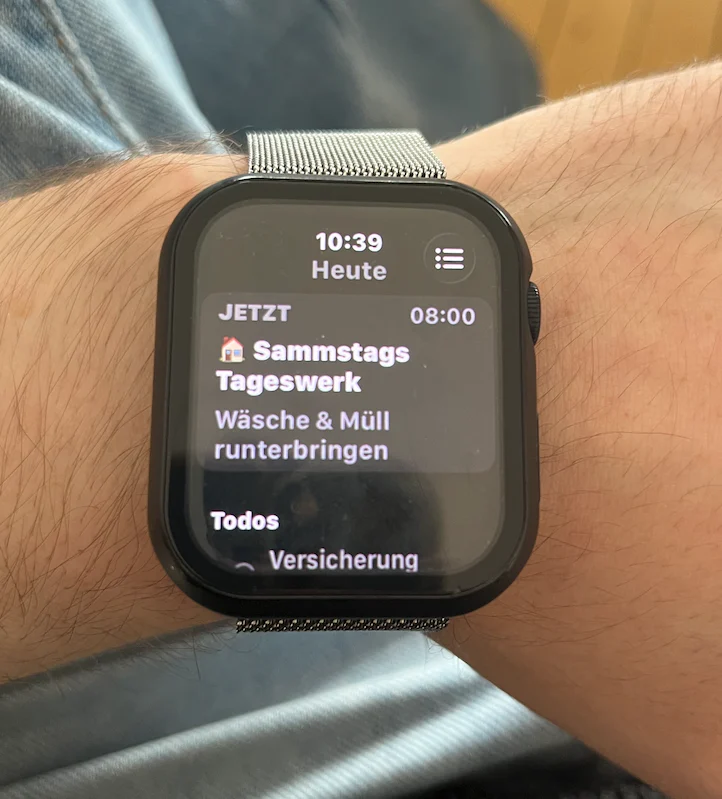
The Today view shows what is happening now without asking me to sort through the entire day at once.
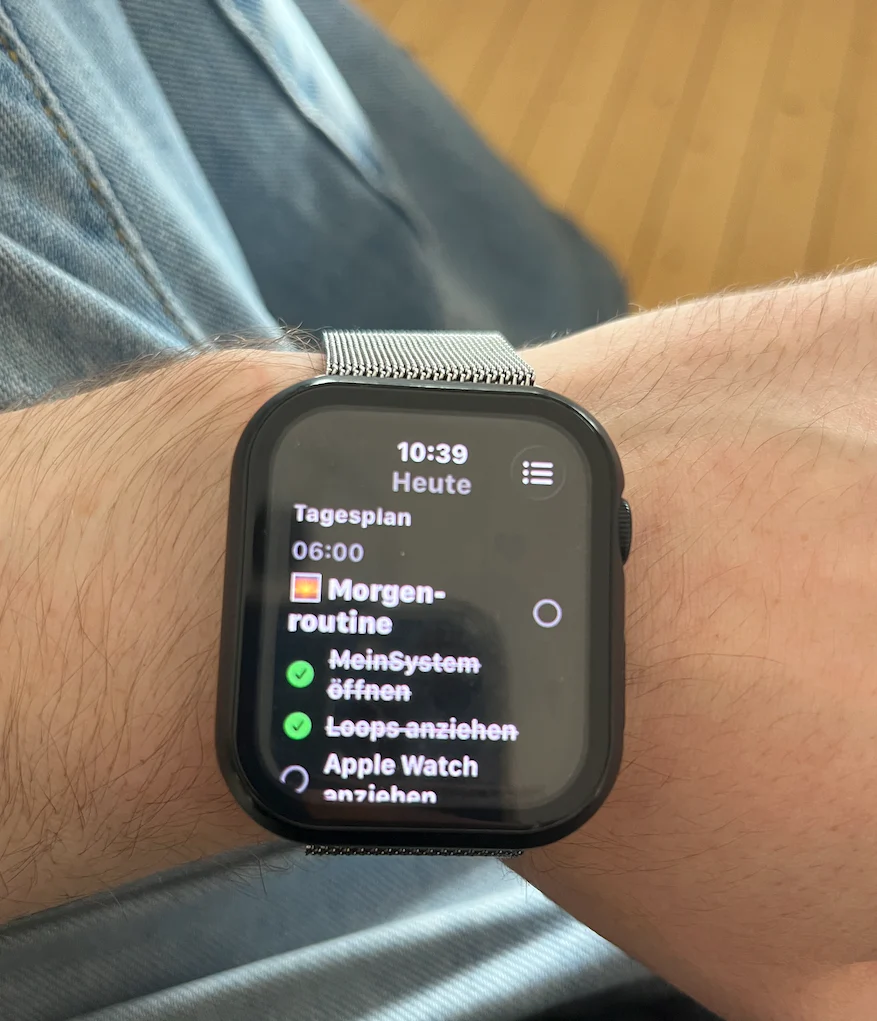
Inside my morning routine, I can see and complete one step at a time.
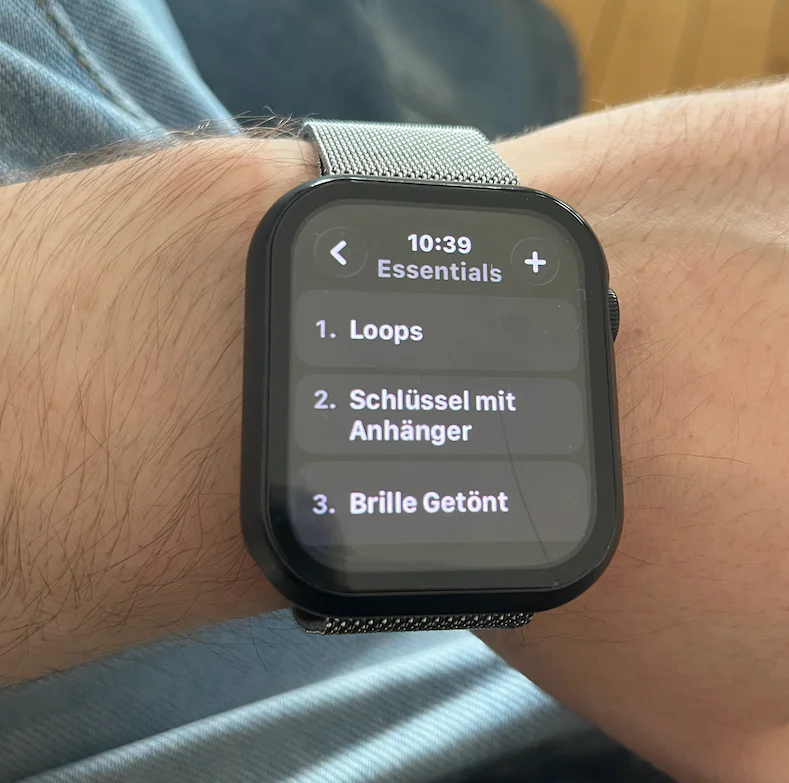
Recurring lists such as my essentials are now available directly on my wrist as well.
This is my personal experience of AuDHD and everyday structure. meinsystem is a planning tool and does not replace medical advice, diagnosis, or treatment.