ADHD · Morning
ADHD morning routine: a template that can start small
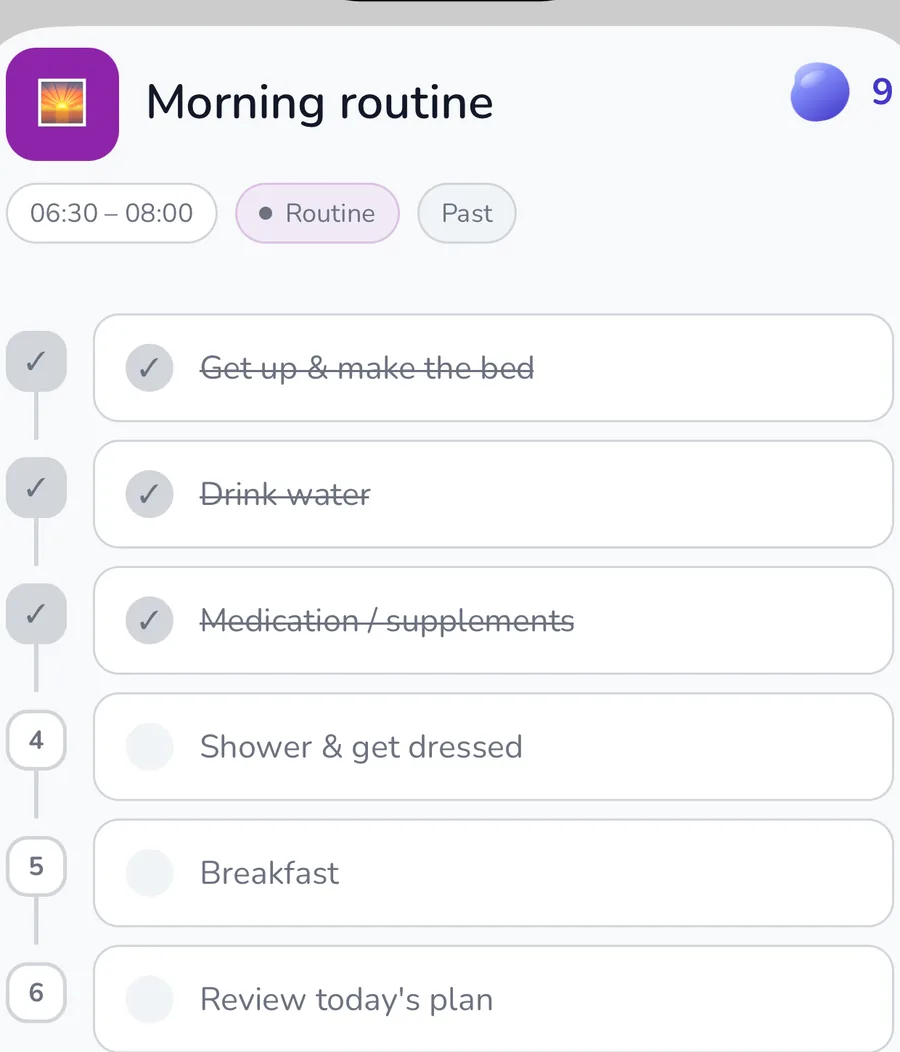
This routine is not about forcing a perfect start. It makes the next few actions visible, so your morning requires fewer decisions.


ADHD morning routine: a template that can start small
What this template addresses
Mornings can open several decisions at once: getting up, eating, medication, clothes, appointments, and leaving the house.
This template separates a small reliable core from optional steps. You can rename, remove, or add anything so it still fits when time or energy is limited.
Low-energy version
- 01Drink something and take essential medication
- 02Brush your teeth or complete a simplified care step
- 03Check the first appointment and decide everything else later

Adapt the template
- Delete every step that is not genuinely necessary in your morning.
- Put important items in the same visible place the night before.
- Include a buffer between getting up and leaving home.
- Keep a three-step version for days with very little capacity.
More templates
ADHD evening routine: help the day become quieter
- Reduce the light level and background noise
- Write down open thoughts or tasks for tomorrow
- Refill your water bottle and prepare essential medication
ADHD daily planner: make the day visible, not perfect
- Briefly check your energy and sensory load
- Add fixed appointments from your calendar
- Choose one essential task for today
Autistic morning routine: start the day with more predictability
- Adjust light, curtains, and sound at a tolerable pace
- Drink, use the bathroom, and complete essential medication tasks
- Put on prepared clothes or choose a sensory-safe alternative
AuDHD morning routine: stable anchors without a rigid sequence
- Drink and complete essential medication as the first anchor
- Choose between two prepared personal-care versions
- Select sensory-manageable clothing from a small set
Common questions
How long should an ADHD morning routine be?
Short enough that you can use it on an ordinary day. Three to five essential actions are often enough at first; everything else can remain optional.
What if I stop using the routine for several days?
There is nothing to catch up on. Return to the smallest useful action today. A routine can be a way back, not a streak you have to protect.
Does every step need a fixed time?
No. A time window or a simple order can provide enough orientation without creating extra pressure.
Related features and articles
Build routines one step at a time
Set up the sequence once and see only the next useful step during your day.
ViewWhat my ADHD morning routine really looks like
A personal account of making the start of the day more manageable.
ViewWhy small decisions take so much energy
Decision fatigue when ADHD and autism overlap.
View
Low-energy day plan
Check off a smaller morning frame when the full routine is too much.
View
Include your own morning as a parent
Your preparation, clear agreements and a short version for limited time.
ViewADHD · Morning
Connect this routine with appointments and tasks
Payment details required · cancel anytime