
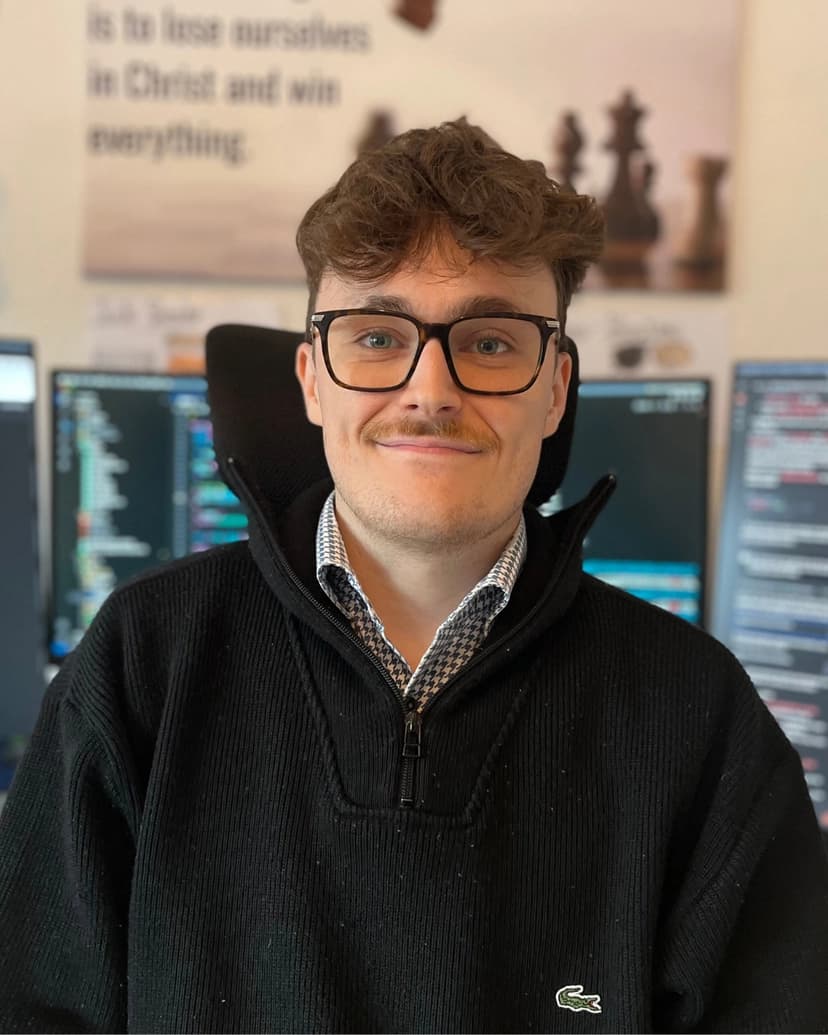
Daily life with AuDHD is often a struggle with too much: too much noise, too much light, too many sensory inputs and too many things I forget.
Over the years, I have found a few things I genuinely need every day. They are not fancy life hacks that claim to transform your life forever. They are simply things that make my days much more manageable. These are my six daily essentials.
1. Loop earplugs, because the world is too loud
Noise is a constant source of stress for me. The supermarket, a train, a café, or sometimes just the dishwasher running while the television is on in the background.
With my Loop earplugs, my surroundings feel quieter to me. I still hear sounds around me, but find them less intrusive. This describes my experience with my own earplugs; for me, they belong in my trouser pocket.
2. My photochromic glasses, because too much light is stressful
Brightness is my second major sensory trigger. When the light is too intense, I become restless and stressed, often before I even understand why.
My glasses darken automatically in sunlight. I do not have to switch between two pairs, which I would constantly forget anyway. They are always with me and adapt by themselves. It may sound like a small detail, but it is extremely important to me.
3. My key chain, because I would otherwise lose my keys
My brain is not good at keeping track of physical objects. Leaving keys behind, forgetting them and searching for them used to be part of my daily life.
Now all my important keys are attached to a chain clipped to my trousers. While they are attached, I am less likely to put individual keys down elsewhere. For me, it is a practical principle: connect important things physically instead of relying only on remembering.
4. meinsystem.app, because I get lost in daily life without it
All right, this is a little promotion for my own work. I admit it. But I would be dishonest if I simply left it out of this list.
meinsystem.app is the app I built because no other system worked for my brain. And yes, I really use it every single day. Without it, I lie in bed in the morning and do not know where to begin. With it, I can see what is coming up and tick things off.
The MeinSystem website explains the features. Current plans show which use belongs to Free, Pro or Lifetime. Promotion over, I promise.
5. My smartwatch, because I cannot hold time and reminders in my head
Time is a separate challenge for me. I miss appointments even though I can see them in my calendar, and hours disappear while I am in hyperfocus. I wrote a whole article about that experience: time blindness with AuDHD.
My smartwatch gives me a visible place for the time, reminders and timers. Which alerts appear on a watch and how a timer is set depend on the model, connected devices and settings. Looking at my wrist gives me another reference point during the day.
6. My water bottle, because I otherwise forget to drink
In hyperfocus, I forget not only time but also my body. Drinking, eating and taking breaks fall away until I suddenly have a headache and cannot work out why.
A large water bottle within view gives me a visible cue. It follows the same principle as the key chain: I do not rely only on remembering to drink. Having the bottle in front of me makes it easier to reach for it.
Four more ideas for your day
These suggestions are editorial ideas to try, not four additional personal essentials of mine. You do not need new products. Choose one situation and use what you already have.
1. Choose one place for things you take out
Keep keys, your travel card and bag in the same place, such as a clear part of a shelf near the door. A fixed place is useful only if you use it again when you return. If other things collect there, start by clearing just that small area.
2. Write a short list of things to take
List only what you need today: “keys, travel card, documents.” Put the note with your bag and check it before leaving. For an appointment, the appointment preparation sheet brings together documents and open questions.
3. Leave one sentence before an interruption
Before switching, write down where you stopped: “Document is open; next, check the address.” The interruption note has fields for progress, where things are saved and the next action. You do not need to summarize the whole task again.
4. Give a task a visible check point
Before starting, decide when to check progress: “After this section, check: finished or one more step?” If you want to choose a time interval, the focus timer shows the time remaining. Decide again at the end; the signal does not require you to finish.
Fictional example: tomorrow's bag
In the evening, the travel card is still in a jacket, the bag is in the hallway and the appointment documents are on the table. Someone puts everything with the bag and writes “keys, travel card, documents” on a note. Before leaving, they check the three things. This is one specific departure, rather than a whole new morning routine.
A note to copy
Situation: Leaving for tomorrow's appointment
What do I need? Keys, travel card, documents
Where is it? With the bag in the hallway
When do I check? Before leaving
Afterwards: Put the bag and keys back in their place
Smallest version: Put just one item you often search for in a fixed place today. After its next use, check whether you put it back. If the place is inconvenient, change it before building a bigger system.
Your essentials may look different
Perhaps these are exactly the things you need. Perhaps your list is completely different. Both are entirely valid.
The point is not to copy my list. It is to discover what reduces the load on your brain. Needing tools or aids is not a sign of weakness. It is a thoughtful way to work with your brain instead of against it.
What are your daily essentials?