
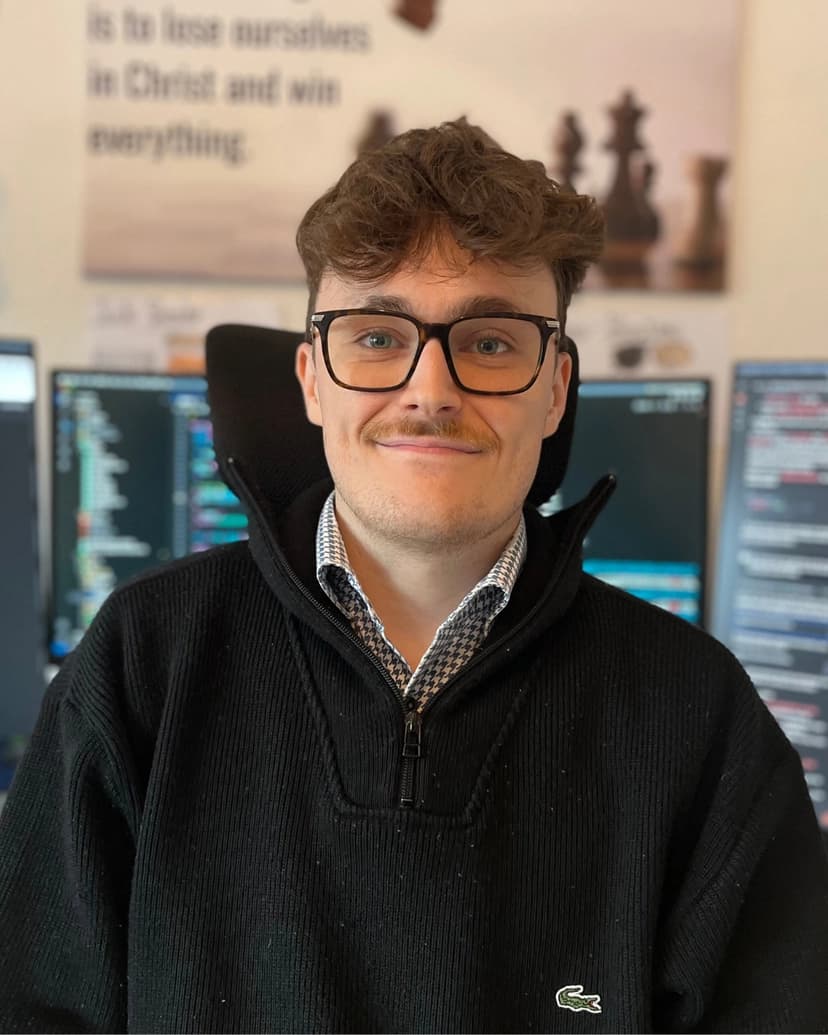
I come home, close the door behind me and collapse inwards.
From the outside, everything looked normal. I was friendly. I smiled, made small talk, laughed at the right moments and maintained eye contact. No one noticed anything.
But as soon as I am alone, I feel how empty I am. It is as though I have been doing a job for hours that no one can see.
That job has a name: masking.
The essentials at a glance
- Masking means hiding neurodivergent behaviour in order to appear “normal”.
- It is not a deliberate lie. It often happens automatically and may have done so since childhood.
- With AuDHD, you often mask in two directions at once: autism and ADHD.
- The cost is exhaustion and, sometimes, losing any sense of who you are without the mask.
- You do not have to remove the mask everywhere, but you need places where you are allowed to remove it.
What masking actually is
Masking means hiding the parts of me that would stand out. I suppress what my brain naturally wants to do and display what other people expect instead.
I force myself to make eye contact even when it feels tiring. I sit still while my body wants to move. I pretend to follow a conversation without effort while internally chasing every sentence. I smile even though the noise in the room has been hurting for a long time.
From the outside, it looks like social competence. On the inside, it is work: constant, demanding work.
This is not lying or manipulation
For a long time, I thought I was dishonest. I believed I was deceiving people because I was not showing them the real Max.
Today, I see it differently. Masking is not a trick designed to manipulate someone. It is protection, something I trained myself to do as a child long before I had a word for it.
You learn early that the genuine version of you causes friction—that you are too much, too strange or too demanding. So you build a version that can get through. Eventually, it operates automatically without you even noticing.
That is not a character flaw. It is a survival strategy.
With AuDHD, I mask in two directions at the same time
This is the part people rarely discuss.
Someone who is autistic may mask in one direction: trying to appear socially effortless. Someone with ADHD may mask in another: trying to appear organised and reliable.
I have both, so I do both at once.
The autism mask says: look relaxed. Maintain eye contact. Suppress the movement. Pretend the noise is fine. Answer “How are you?” with “fine”, even when your nervous system is burning.
The ADHD mask says: do not let anyone notice you lost the thread. Hide that you almost forgot the appointment. Pretend you have everything under control while twenty tabs are open in your head.
Two masks, at the same time, all day.
Sometimes, they even pull against each other. The autistic side wants quiet and withdrawal. The ADHD side is bursting with impulses and wants to talk. On top sits the mask, smoothing both sides so that nothing is visible from outside.
No wonder there is nothing left afterwards.
What masking truly costs
The obvious cost is exhaustion. After an evening with other people, I sometimes need two days before I feel like myself again. Not because the people were unpleasant, but because holding the mask takes so much energy. That sits on top of the sensory overload I already carry.
When that continues for years, it can become something larger. Many neurodivergent people eventually enter autistic burnout. This is not conventional work-related burnout. It is a state in which even the mask no longer works and nothing is possible.
But another cost frightened me even more.
When you perform for years, you can lose your connection with who you are without the mask. Someone asks what you like, and you discover you cannot answer. You have spent so long playing the version other people accept that you no longer know your own preferences.
It is difficult to describe. But if you have experienced it, you know exactly what I mean.
Why I continued masking for so long
Because it worked, at least in the short term.
The mask helped me connect with people. It carried me through school, conversations and situations where the real version of me would have caused friction. It protected me from rejection.
No one ever told me I was allowed to be different—that it was all right to need breaks, or that I did not have to present the polished version of myself in every situation.
I had to teach myself that, late in life. It is still a process.
What has helped me
I want to be honest: “Just take off the mask” is not good advice. In many situations, the mask protects you. Dropping it completely is neither realistic nor always safe.
What changed things for me was more practical.
Places where I do not have to mask. For me, that means a small circle of people who know how I function. If I need to leave early because I am exhausted, I simply say so. I do not have to play anyone there. I wrote about this kind of small-scale community in my article about faith with AuDHD. One safe place can change more than any technique.
Fewer situations that require heavy masking. I now plan my week so that demanding appointments are not stacked one after another. After intense social events, I deliberately schedule recovery. That is not weakness. It is maintenance. On those following days, a smaller low-energy day plan helps more than trying to catch up on a full routine.
Reducing the work of the ADHD mask. A large part of my masking was always the performance of “I have everything under control”. I hid what I forgot, mixed up or almost missed. Since moving those things out of my head and into a fixed system, I have less to conceal. Not because I suddenly became organised, but because the system holds the gaps I used to cover. That is why I built meinsystem.app. It does not remove masking, but it takes some weight from one of the two masks.
Telling a few people. I did not need to tell the whole world. But saying “I have AuDHD, and some things work differently for me” to the people closest to me removed an unbelievable amount of pressure.
You are allowed to remove the mask—but not everywhere and not all at once
If you recognise yourself here, this is the main thought I want to leave with you:
Masking does not make you wrong or dishonest. It means you learned early how to protect yourself. At the time, that was intelligent.
You do not have to remove the mask overnight. You do not need a radical break. To begin, you only need one place, one person or one situation where you do not have to perform.
Start there, with the person who feels safest. Notice what it is like to be yourself for a few minutes.
This is not a major project. It is only the first step.
You are allowed to take your time. The mask protected you for years. Taking it off can be a long process too.
Frequently asked questions about masking with AuDHD
What does masking mean with ADHD and autism?
Masking means suppressing or hiding neurodivergent traits in order to appear “normal” from the outside. It may involve forcing eye contact, suppressing movement, concealing exhaustion or pretending to have everything under control. It often happens automatically rather than deliberately because it has been practised since childhood.
Is masking the same as pretending to be someone else?
Not quite. Pretending can sound calculated. Masking is better understood as a learned protection mechanism. You are not deceiving someone in order to harm them. You are trying to navigate situations where the genuine version of you was rejected in the past.
Why is masking so tiring?
Because you are continuously monitoring and controlling your own behaviour. You observe yourself, correct yourself, suppress impulses and participate in the situation at the same time. That background process takes enormous energy even though no one can see it.
What is different about masking with AuDHD?
AuDHD combines autism and ADHD. You may therefore mask in two directions: appearing socially smooth and calm on the autistic side, while appearing organised and reliable on the ADHD side. The two masks can contradict each other, which makes the process even more tiring.
How can I begin masking less?
Do not try to change every situation at once. Choose one safe place or person where you do not have to perform and begin there. Plan recovery after socially demanding situations, and tell a few people you trust so you do not always have to hold yourself together. Removing the mask is a process, not a switch.
You are not wrong, and you are certainly not broken
Before you scroll on, I want to tell you something, and I mean it exactly as written.
Masking does not mean something is wrong with you. It means you learned to protect yourself. You found a way through a world that was not designed for your brain. That is not weakness. It is adaptation under difficult conditions, and it brought you this far.
Perhaps you carry shame: the feeling that you are not genuine enough, that people do not truly know you because they only know the mask, or that you are difficult, too much or too complicated.
I know that shame. This is what I want to say to it:
You did nothing wrong. You got yourself through.
You do not need to be ashamed that your brain works differently. You do not need to be ashamed that you require things others may not need: breaks, quiet and people around whom you do not have to perform. Those are not defects. They are needs, and having needs does not make you broken. It makes you human.
You are not too much. You simply spent too long in places that did not have enough room for you.
The real you beneath the mask is not the problem you had to hide for years. It is the part of you that endured all of this. That part deserves to be seen without having to apologise.
It will not happen overnight. No one removes years of protection in one afternoon. But you are allowed to begin: slowly, at your pace, in one safe place.
On days when it does not work, when the mask stays up all day and you come home empty, nothing is wrong with you then either. You have not failed. It was simply a day that asked a great deal from you.
You are not wrong.
You are not broken.
You have nothing to be ashamed of.
You are a person with AuDHD who had to be strong for a long time. You are allowed to learn, slowly, that you no longer have to do that alone or all the time.
Do not give up on yourself.