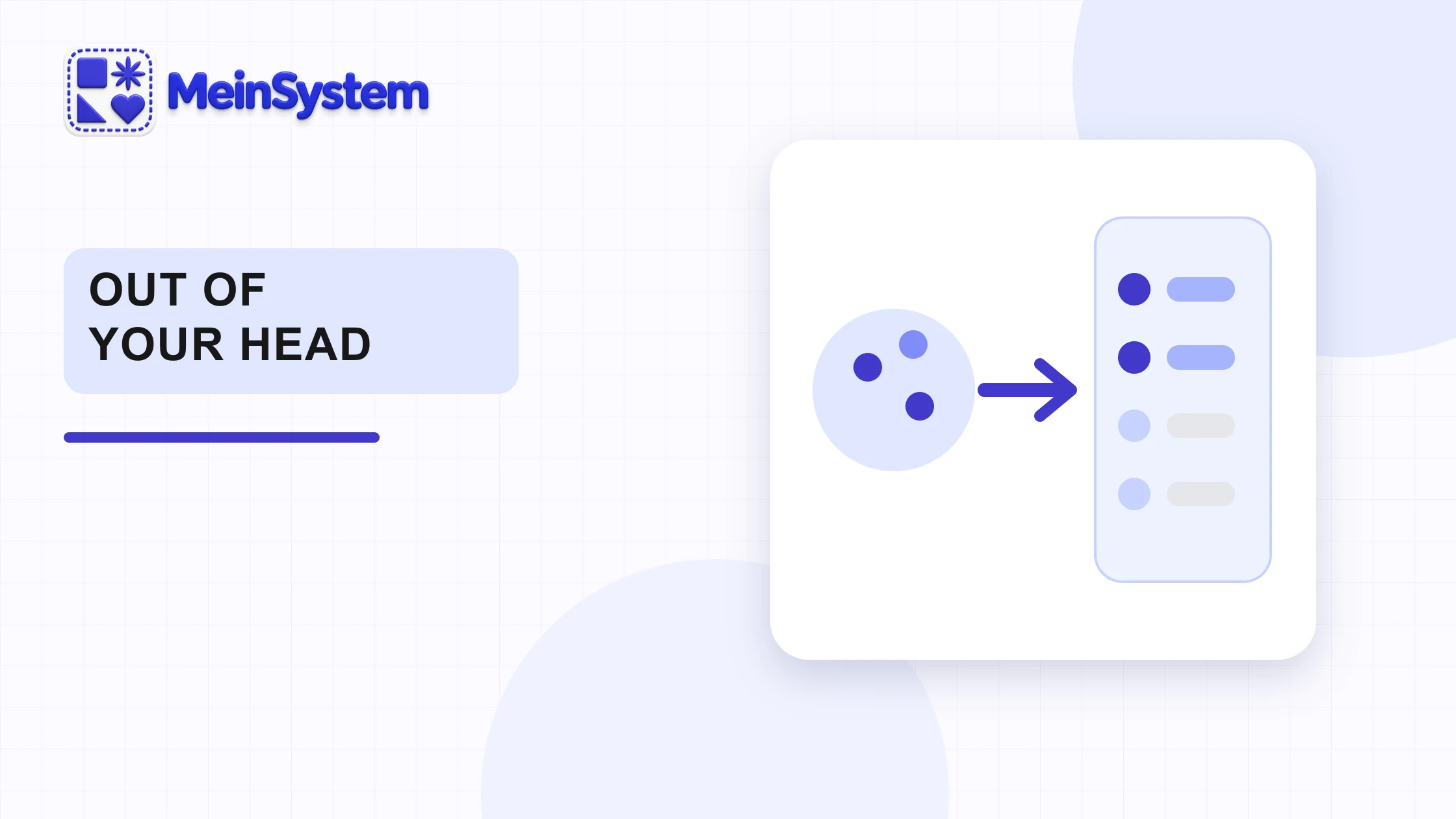

You remember a bill while brushing your teeth, groceries while working and the unanswered message while standing in the supermarket. Each thought appears briefly urgent. Because you do not want to lose it, you try to hold it mentally – leaving less attention for the step in front of you.
An external system does not need to document every thought. It needs reliable hand-offs: from your head into an inbox, from the inbox to the correct home, and from there back into the relevant moment as a useful reminder.
Why remembering can consume so much energy
The NIMH lists forgetting daily tasks and possible difficulties with organisation, planning and finishing large projects among experiences adults with ADHD may have. Many other factors can affect attention and memory as well; forgetting individual things is not a diagnosis.
Repeatedly rehearsing open items is not neutral storage. Each reminder briefly interrupts the current context. An external system can give those open items a visible place.
1. Capture only enough to recognise the thought later
A quick note does not need to be polished. It needs a verb and enough context. “Insurance” leaves many questions for later. “Call insurer: is the confirmation still missing?” makes the next step recognisable.
If capture requires too many fields, you may avoid it at the moment it matters. Begin with one sentence. Details can be added when you review the inbox.
2. Use one inbox
Choose one entrance for spontaneous tasks and thoughts. It can be a digital inbox, a small paper card or a note on your phone. Several entrances can work, but every additional place needs its own review point.
One central entrance reduces the question “Where did I write that down?” The article about too many planning apps explains how functions can have clear owners without forcing everything into the same application.
3. Turn thoughts into visible next actions
When you empty the inbox, decide what each entry means. Is it an appointment, reference material, a recurring routine or a one-time task? For tasks, write the next observable action.
“Birthday” might become “send gift idea to my sister by Wednesday”. “Kitchen” might become “open the dishwasher and remove clean dishes”. The task breakdown tool can help when the first action is still too large.
4. Give recurring items a recurring home
Something that must be remembered every week should not be treated as a brand-new thought each time. Choose a rhythm and a visible cue for bins, medication, plants, invoices or preparation.
A recurring sequence may belong in a routine, while a flexible repeated action may belong in a task list and an externally fixed event belongs in a calendar. The exact tool matters less than not rebuilding the same reminder from memory each week.
5. Write reminders with enough context
A reminder that says “Remember!” transfers all the thinking back to your future self. A more useful version is: “Before travelling home, collect prescription from the pharmacy – photo is in Files.” Time, action and required material stay together.
Use reminders deliberately. If every task produces three notifications, the signals can become background noise. A reminder should trigger a concrete hand-off, not merely announce that a task exists again.
6. End the day with a small hand-off
Spend five minutes at the end of the day reviewing the inbox, checking tomorrow’s calendar and preparing the first action for no more than one important task. You do not need to clean the entire system.
The purpose is not to achieve more in the evening. You are making sure the next morning does not have to reconstruct every open loop at once.
An example of a small external system
- Capture: one inbox on the phone.
- Appointments: anything tied to a fixed time goes in the calendar.
- Tasks: concrete next actions go in one list.
- Routines: recurring sequences have a recognisable cue.
- Reference: files and notes are linked from the task or appointment.
- Review: inbox in the evening, calendar in the morning and the night before.
The system does not need to become more complicated because life is complicated. It only needs to be reliable enough for you to release a thought after handing it over.
Sources and context
- NIMH: ADHD in Adults – 4 Things to Know – official overview of forgetfulness, organisation, planning and daily tasks.
- NICE guideline NG87 – includes written instructions and individually appropriate support among possible environmental adjustments.
- Leicestershire Partnership NHS Trust: Strategies and support – practical guidance involving central task locations, calendars, routines and visible reminders.
This article provides general organisation ideas and is not diagnosis or treatment.